

Growing excitement at every level of lacrosse has lifted the sport out of its Northeast roots and into the spotlight of the sports world.
Lacrosse is the oldest organized team sport in North America, first played by Indigenous nations as “The Creator’s Game.” It was a sacred tradition that represented healing and respect for the Creator, hence the name. Games could last for days and involve hundreds of players across fields that stretched for miles. The Iroquois often referred to it as “war’s little brother,” a reminder that the sport has always carried both cultural and competitive spirit.
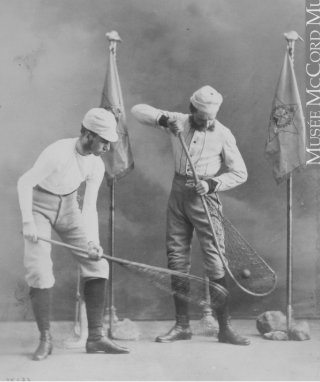
Jesuit missionaries in the 1600s observed the game and called it La Crosse, meaning “the stick” in French. Over time, European settlers modified and reshaped it. In 1867, Canadian dentist William George Beers created the first official rules, set team sizes, and shortened games. This transformed it from a sacred game into an organized sport.
Source: Wikipedia
Women began playing in Scotland in 1890 and in the United States again in the 1920s, expanding the game’s reach. Though it has evolved into versions such as field, box and sixes, lacrosse still reflects the skill and teamwork that defined its origins. Field lacrosse is the traditional outdoor version with more players and space. Box lacrosse is the indoor version that’s faster and more physical. Sixes is a newer, faster version with fewer players, played on a smaller field.
In the 2000s, participation in youth and college lacrosse grew rapidly. Professional leagues such as the Premier Lacrosse League and National Lacrosse League brought new attention to the sport. After recovering from the pandemic’s impact, lacrosse is thriving again and will return to the Olympic Games in Los Angeles in 2028. What began as an Indigenous tradition has become an international sport while preserving its long history.
Today, lacrosse is entering a moment unlike any other in its history. It is changing from a popular Northeast pastime into an international phenomenon. For the first time, all levels of the sport, including youth, high school, college, professional and global, are growing simultaneously. Participation numbers, media coverage, sponsorship interest, and visibility are rising, indicating it is on the verge of becoming the next major American sport. In other words, lacrosse is the next big thing.
Hudson Rabatin (Form VI), Boys Varsity Lacrosse captain and club lacrosse player, explained that he first connected with the sport because it fit his athletic background so naturally. “I started playing lacrosse, and I picked it up pretty easily,” he said. “Lacrosse was a place where a pure athlete can demonstrate all his skills.” For him, the sport stands out because “if you’re strong, if you’re fast, if you’re physical, you can use all of those attributes in lacrosse,” which he feels is less accurate in sports like baseball or football. Although he does not think lacrosse is universally easy to learn, he added that “if you’re generally athletic, it is easy to pick up.” Hudson also spoke about the sport’s changing culture. “I think it is changing, but I think it is still probably a Northeast prep school sport,” he said, though he has noticed growth in places like Florida, Texas and California. He sees social media playing a significant role in its rise and has watched more students join the sport at Fieldston. His own path reflects that trend, since “I started playing as a sophomore, I had never picked up a stick before that.”

Source: Navy Sports
The fastest growth is happening among youth players. Over the last twenty years, youth lacrosse has expanded at a rate unmatched by any other traditional team sport. Kids are drawn to the speed and nonstop action. Every position demands involvement, quick thinking, creativity and athleticism. The sport blends elements of basketball, hockey, soccer and football, giving it a familiar feel that young athletes understand. As the Army & Navy Academy notes, “Lacrosse is characterized by intense action, strategy, finesse and power,” and because “most young people can play the game,” athletes of all sizes and backgrounds feel they can succeed in it.
At the same time, parents appreciate lacrosse as a safer contact sport. As concerns about concussions and high-impact collisions increased, especially around football, many families turned toward lacrosse, which offers the intensity of a contact sport while reducing the frequency of the most impactful collisions. Girls wear goggles and have stricter rules about contact, while boys wear helmets. A 2021 article from USA Lacrosse reports a study showing that headgear “significantly reduces concussion rates” in girls’ high school lacrosse.
The result has been a surge of new players, leagues and training programs across the country. States that barely had lacrosse ten years ago now have competitive youth leagues, travel programs and high school rivalries.

That youth momentum feeds directly into the growth of the college game. In the last decade, dozens of universities have added NCAA men’s and women’s lacrosse teams. Lacrosse creates new recruiting pipelines and allows schools to expand their athletic offerings without incurring the enormous costs of sports like football or hockey.
At the same time, the sport’s old reputation as a Northeast “preppies’ game” is fading. As lacrosse has spread across the South, Midwest and West, it has attracted athletes from public schools, club programs and nontraditional regions, bringing new styles of play and diverse cultural backgrounds. ESPN coverage, the PLL’s national reach and Olympic inclusion have also pushed lacrosse into the mainstream.

In women’s athletics, lacrosse is especially valuable because it helps expand Title IX opportunities while attracting strong athletes. Title IX is a federal law that requires schools and colleges to provide equal athletic opportunities for women and men. Because lacrosse is growing quickly and schools can add women’s teams without the high costs of sports like hockey or rowing, it’s a really effective way for colleges to expand opportunities for female athletes and stay in line with Title IX.
Hazel Cignarella, a junior on Fieldston Girls Varsity Lacrosse who plays high-level club lacrosse and is currently in the recruiting process, sees the sport’s rapid national growth shaping opportunity. When asked how expansion has influenced her own recruiting, she explained that as more athletes across the country pick up lacrosse, “there’s obviously more competition” than when the sport was concentrated in the Northeast. She believes this rise in participation is also what makes lacrosse the next big thing for girls’ sports. “It’s rapidly improving, and it’s such a great sport,” she said, noting that skills from basketball and other sports translate naturally to the game. Hazel also pointed out that players are “picking it up at such a rapid rate,” although she recognizes that accessibility remains an issue because “the affordability of a stick, goggles, and mouthguard is definitely not very accessible, unlike sports like basketball or soccer.” Still, she emphasized how easy it can be to get started once that barrier is met: “If you can afford a stick, you can just pick up a ball and start throwing on a wall, and then you get better from that.”
The sport is no longer confined to the Northeast. It now thrives across the South, Midwest and West. Programs in California, Arizona, Michigan, Colorado, Florida, Kentucky and Ohio have become nationally competitive and regularly draw large crowds. Colleges that never considered sponsoring lacrosse twenty years ago now view it as one of the most strategic sports they can invest in.


Source: Alamy
The professional game has grown even more rapidly. In 2019, Paul Rabil co-founded the Premier Lacrosse League, which displayed what a modern professional league could look like. Rabil played collegiate lacrosse at Johns Hopkins University. He won All-American honors all four years and holds the record for most playoff goals, assists and points. Winning two championships in 2005 and 2007 and receiving the McLaughlin award as the nation’s best midfielder, he was inducted into the Johns Hopkins athletics Hall of Fame in 2022. Rabil played professionally in Major League Lacrosse (MLL) for eleven years from 2008 to 2018, when he co-founded the PLL with his brother, Mike Rabil. Paul currently serves as the league president, while Mike is the CEO.
Instead of relying on local franchises, the PLL travels to major cities on weekends and brings the highest level of lacrosse directly to fans all over the country. Its media partnership with ESPN brought lacrosse into mainstream sports broadcasting. Its focus is on player branding and turning athletes into recognizable public figures with large social followings.

Before the Premier Lacrosse League reshaped the professional game, Major League Lacrosse (MLL) was the first significant attempt to bring field lacrosse to a national audience. Founded in 2001, the league operated for nearly two decades. It introduced innovations such as the two-point shot and a faster, more aggressive style that have influenced how the sport is played today.
MLL teams rose and folded at different points, but the league helped build professional visibility at a time when lacrosse was still considered niche. When the MLL merged with the Premier Lacrosse League in 2020, it had already laid the foundation for a more modern and widely watched version of professional lacrosse. The PLL’s current momentum, along with the broader rise of the sport, grew directly from the groundwork the MLL established.

On the global stage, lacrosse is preparing for one of the most critical moments in its modern history. In 2028, the sport will return to the Olympic Games in Los Angeles. This will be the first time lacrosse appears in the Olympics in more than a century. It will be played in the fast-paced sixes format, which is designed for international competition, television audiences and new fans. Olympic inclusion will introduce the sport to millions of viewers worldwide. It will encourage countries to build new national programs and increase sponsorships and media attention.
Recent data shows just how quickly lacrosse is expanding across the world. According to participation research compiled by Zipdo and U.S. high school athletics surveys, the number of lacrosse players in the United States has grown from about 340,000 in 2001 to over 840,000 in 2023, with high school participation rising 150% over that period. Youth data reported by North American Lacrosse associations shows that the number of young players surpassed 1.5 million in 2023, and the average age of U.S. players has dropped from 16.5 to 14.2, indicating rapid youth adoption. Growth is robust in the women’s game: NCAA data shows a 300% increase in women’s lacrosse programs since 2000, while NFHS reports a 200% rise in high school girls participation.

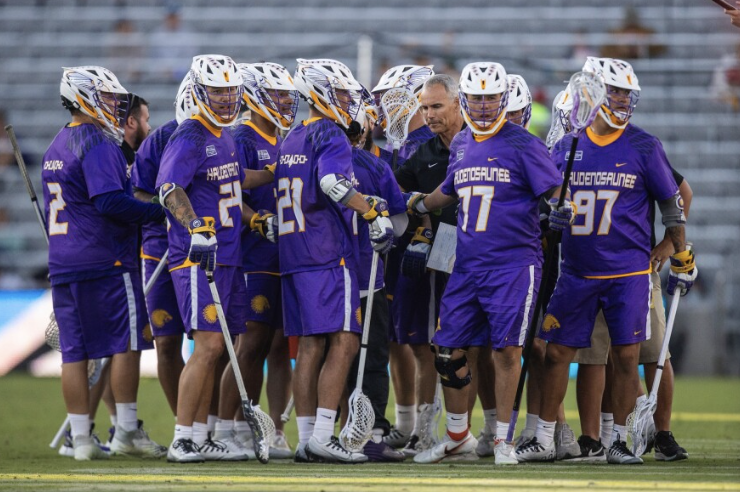
Even as the sport grows at every level, one of lacrosse’s defining aspects is its honoring of its Indigenous origins. The Haudenosaunee Nationals, who represent the original creators, remain one of the most respected teams internationally. They are an international team, like Team USA or Team Canada, representing the Indigenous nations that created lacrosse in world competitions. Increasing numbers of players, coaches, and fans are learning about lacrosse’s cultural history and acknowledging the role Indigenous nations have played in the sport’s development.
All of these factors, youth, college, professional, and Olympic visibility, have positioned lacrosse to become the next major sport in the United States. As it continues to grow in schools, colleges, professional leagues, and soon the Olympic stage, lacrosse is emerging as the most promising up-and-coming sport in the country. Lacrosse will define the next generation of American athletics. Lacrosse is the next big thing.
