

On January 20, 2025, President Trump ordered the Secretary of State, Marco Rubio, to officially designate select international cartels as foreign terrorist groups. The White House stated, “The Cartels functionally control, through a campaign of assassination, terror, rape, and brute force nearly all illegal traffic across the southern border of the United States … The Cartels’ activities threaten the safety of the American people, the security of the United States, and the stability of the international order in the Western Hemisphere. Their activities, proximity to, and incursions into the physical territory of the United States pose an unacceptable national security risk to the United States.” The order additionally mentioned how other drug gangs, such as Tren de Aragua, threaten safety.
On February 20, one month after the order, the Department of State announced that eight groups including: Tren de Aragua from Venezuela, Mara Salvatrucha from Los Angeles, Cártel de Sinaloa and Cártel de Jalisco Nueva Generación from Mexico would be designated as “Foreign Terrorist Organizations (FTOs) and Specially Designated Global Terrorists (SDGTs).” This order was followed by Marco Rubio, the Secretary of State, designating two additional gangs, Los Choneros and Los Lobos from Ecuador, as terrorist groups on September 4. This came after the U.S. government cooperated with Ecuadorian officials to extradite Fito Macias – the leader of the Los Choneros drug gang – in July.
The classification of drug gangs as terrorist groups is a hotly contested topic. One must consider how the motives of these groups might be compared to that of what is “traditionally” viewed as a terrorist group. The January 20 announcement is the first official designation of drug gangs as terrorist groups in US history. It is a legally dubious decision as drug gangs usually act in order to seek profit, whereas terrorists are historically politically and socially motivated. By recognizing drug gangs as terrorist groups, the government freezes U.S. assets of gangs mentioned and prohibits U.S. citizens from participating in transactions with them. Here is an overview of a few affected groups:
Tren de Aragua (TdA):
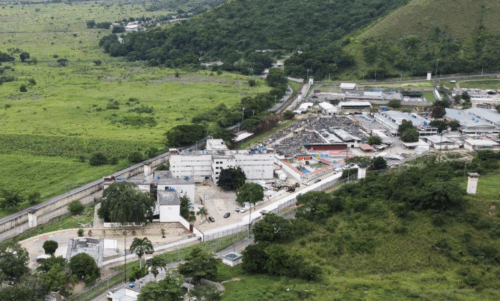
The Tren de Aragua, meaning “The Train of Aragua” was founded in 2014 in The Tocorón Prison in Aragua, Venezuela. While inside prison walls, its leaders ran a zoo, restaurant, disco etc. They simultaneously directed murders, kidnappings and other crimes in the outside world. The group got its start in extorting Venezuelan businesses and later began people-trafficking in Colombia, Peru and Chile. When many Venezuelans fled Venezuela’s economic crisis, TdA recruited international members. TdA has a presence in the U.S., including Texas, New York, Colorado and Wisconsin. “Declaring the gang a foreign terrorist organization means gang members could face increased sentences for crimes such as distributing illegal drugs. [Texas] State law also authorizes civil penalties against foreign terrorist organizations,” according to an article by Jaun Salinas II and Pooja Salhorta in The Texas Tribune.
Mara Salvatrucha (MS-13):
Mara Salvatrucha’s name interestingly comes from the Charles Heston film, “The Naked Jungle.” with the translation of “Cuando Ruge la Marabunta’” to “When the Ants Roar.” “Mara” reflects how they protect each other like ants. The thirteen comes from the Mexican Mafia’s title because “M” is the thirteenth alphabet letter, thus the origin of the name for the infamous MS-13 gang. MS-13 is known for its motto: “kill, rape and control.” While founded in Los Angeles in the 1980s by Salvadoran immigrants, its origins can be traced back to the battle between the Martí National Liberation Front (FMLN) and government forces in El Salvador in the 1970s, leading to the migration of thousands of Salvadorans into Southern Los Angeles. Since then, the MS-13 has been active in almost every U.S. state and participated in gang wars, murder, prostitution, and drug smuggling among other crimes. In 2004, the Federal Bureau of Investigation (FBI) created a task force specifically for the MS-13 and recorded that there were 6,000-10,000 MS-13 members in the U.S.
Cártel de Sinaloa:
Cártel de Sinaloa is a product of the Guadalajara cartel of the 1980s, one of Mexico’s largest criminal organizations of its time. Started by Héctor Luis Palma Salazar and Joaquín ‘El Chapo’ Guzmán in Sinaloa state. Cartel de Sinaloa is historically responsible for the majority of illegal drugs, such as marijuana, cocaine and heroin that have been smuggled into the U.S from Mexico. A 2015 report claimed that Sinaloa dominated the drug market in nearly every state. Its previous annual revenues have been estimated to be as high as 39 billion dollars. El Chapo and Palma are currently incarcerated in the U.S. and Mexico but their successors continue to run the Sinaloa cartel.
Cártel de Jalisco Nueva Generación (CJNG):
Cártel de Jalisco Nueva Generación (CJNG) debuted in 2009, making it relatively new, yet it quickly rose to power in Mexico and on the international scale. Upon its founding, the message “We are the new group Mata Zetas (Zeta Killers)… and we will fight them in all states for a cleaner Mexico” was found alongside three mutilated bodies in Cancún. In 2014, CJING declared war on their biggest Mexican rival, Cártel de Sinaloa. CJING and the Sinaloa Cartel constantly battle over Ciudad Juarez and Tijuana, cities that lead to entry into the U.S.
The new narco-terrorist designations could generate tension between the U.S. and origin nations of some of the groups. Recently, military intervention between the U.S. and Venezuela escalated. The Trump administration has confirmed numerous strikes (starting on September 2) targeting vessels off the coast of Venezuela and the Caribbean suspected of transporting narcotics. Despite the terrorist designations, many are questioning if lethal force is a valid way to combat drug smuggling, especially considering the deaths caused by the strikes.
History teacher, Paul Heideman shared, “any time the government is killing people without the context of war, I think it should be very concerning. The application of the term ‘terrorist’ to drug smugglers is kind of a way to try to get around that and to say there really is another conflict going on here. I think that’s quite dubious. Even leaving aside the question of they’ve never provided any proof whatsoever that any of the boats that have been destroyed have been engaged in drug smuggling. I think it’s very concerning.”
