


Unless otherwise noted, all images are credited to Lucia Mastroianni and Yanling Li
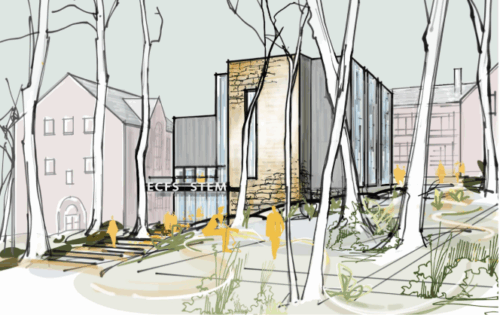
Over the past few decades, our school has embarked on many innovative projects, such as renovating the Tate Library, improving the Student Commons and Cafeteria, converting the Print Shop and Design Workshop into the Engineering and STEM rooms, and building the new Fieldston Lower Playground. Now, after 24 years of planning, the new Fieldston Science building is finally in the making.
According to Fieldston Science Department chair Dr. Paul Church, it wasn’t until 2017 that “[the school] came up with a plan [for the building] and expanded on that based on our needs.” This summer, Fieldston selected an architecture firm and construction group with the help of its owner’s advisor, Cumming Group. The next step will be moving on to schematic design. In the meantime, numerous members of the Fieldston community have been discussing the purpose, needs and logistics of the new building.
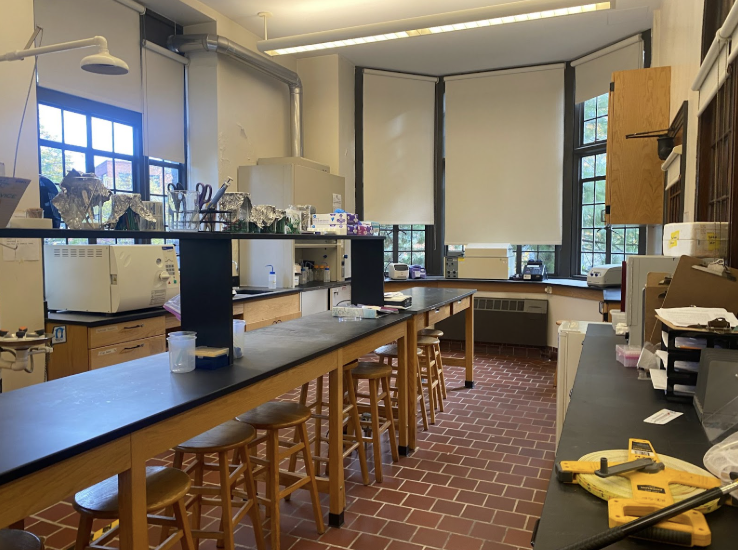
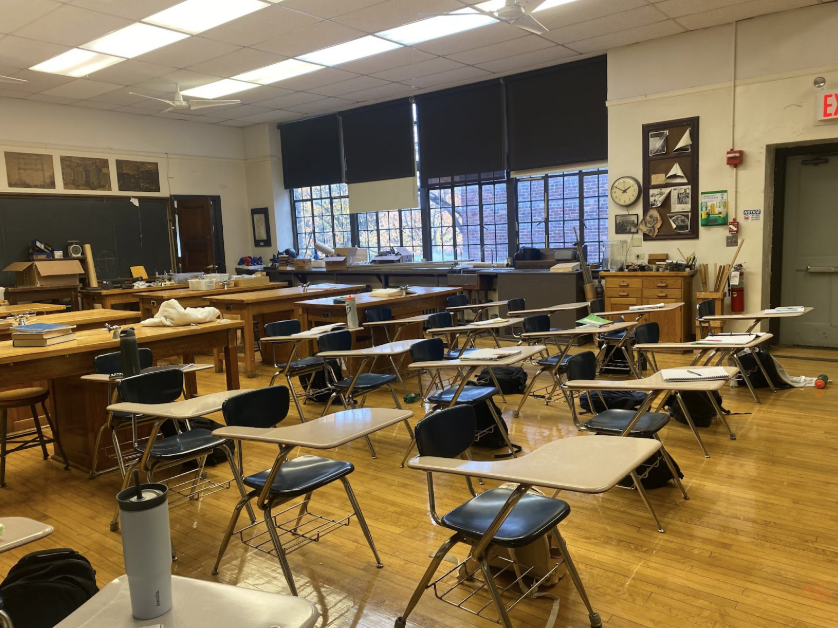
Our current science building creates challenges for the department. The main issue is limited lab space. Although our school currently has one great lab for Biology, Chemistry and Physics, respectively, Church pointed out that three labs for each subject are needed. Science teacher Howard Waldman also commented on the quality of our current materials: “Infrastructure is quite old, so we have to modernize in order to conduct experiments appropriate to modern biology, chemistry and physics classes.”
Additionally, teachers in Fieldston’s Science Research program express the lack of space and resources. In the first year of this two-year program, run by Waldman and Dr. Abigale Koppa, students learn valuable research skills by conducting a lab project. The room for this work is small, and students often bump into each other when handling chemicals. Koppa describes, “It’s very cramped, and students are constantly having to shuffle past each other to access equipment.” Church added that Science Research I students are having their classes in a prep room– a room designed for teachers to prepare materials for labs, not conduct them. This increase in space would not only result in a safer experimental space for students, but it would also create opportunities to add more resources and lab equipment. Koppa explains, “lines form while waiting for certain equipment because we don’t have space to have multiple of the same piece.”
There are also fantastic STEM elective courses offered at Fieldston, such as Astronomy, Animal Behavior and Forensic Science. These courses utilize classrooms from other departments and struggle to find spaces that benefit students’ learning. The new science building will include more science classrooms for these electives, so they can also become lab courses.
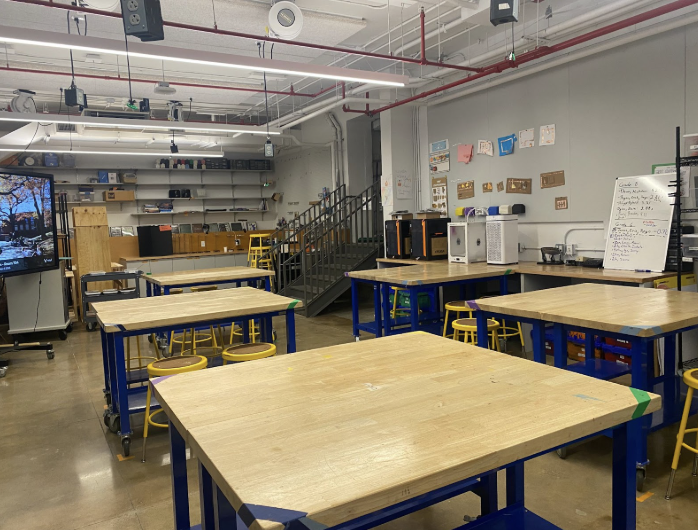
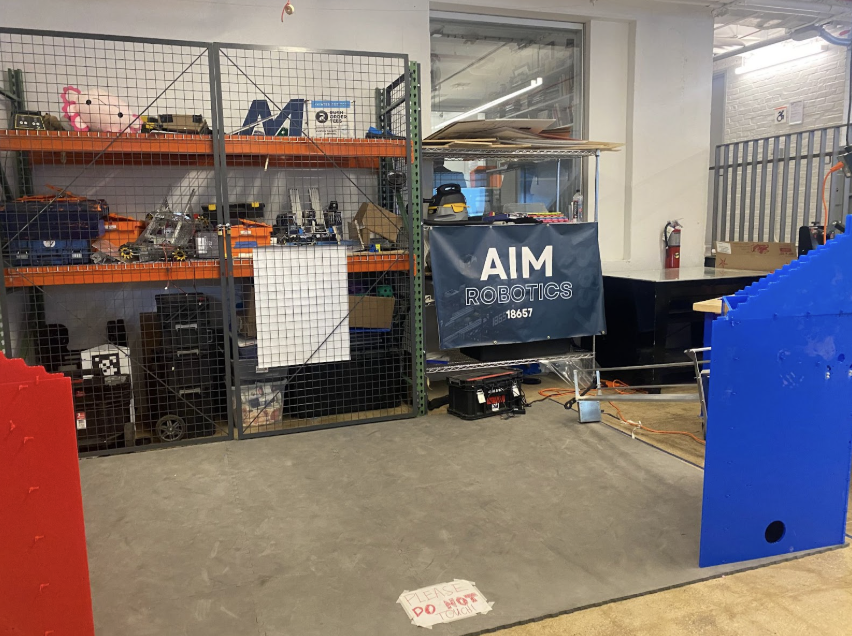
Beyond science classes and electives, Fieldston’s STEM clubs and extracurriculars have much potential for improvement as well. Fieldston’s Rube Goldberg engineering team, which won the world championship two years in a row, is becoming increasingly popular. Our school already has a usable space for engineering classes. However, with the engineering team, Middle and Upper School classes and now the Robotics team all crammed into one space, we’ve outgrown it. As department chair, Church wants all students at Fieldston to have the opportunity to understand the joy of conducting science through hands-on lab experience. “Having the facilities will allow that to happen, and I’m very happy that the Board of Trustees is supporting this project,” said Church.
Dr. Teddy O’Rourke, Fieldston’s Chief Operating Officer (COO), provided insight on the history of this ongoing project. The new science building, once completed, will address the space and resource issues in Fieldston’s current building. The project has been in discussion for 24 years, with the first significant step taken in 2013-2014 when Fieldston hired a company to complete a master plan. This plan analyzed the campus, identifying spaces that were outdated or overcrowded, making the need for a new science building more apparent. At this point, a capital campaign was launched, which proposed several initiatives, including the renovation of the Tate Library and the addition of the two engineering studios in the 700s building. This also marked the science building’s official inclusion as a priority on the timeline for campus renovations.
In 2017, architects were tasked with conducting a “program study” to assess the science programs and current facilities. The architects analyzed classroom usage, space needs and areas requiring improvement. This formed a foundation for the next step in the process: a “site analysis” completed in Fall 2024.
The site analysis had three major objectives: the first was to review zoning laws to understand the parameters within which the new building could be constructed, including building height and proximity to property lines; the second objective was to create a schedule and an estimated cost for the project; and the final objective was to identify a suitable location for the building. Seven locations were considered, including a renovation of the JV gym, constructing the building in the parking lot next to the Tate Library, adding an extension to the 400s building and the final chosen location: a new building north of the traffic circle, next to the 200s building and the arch.
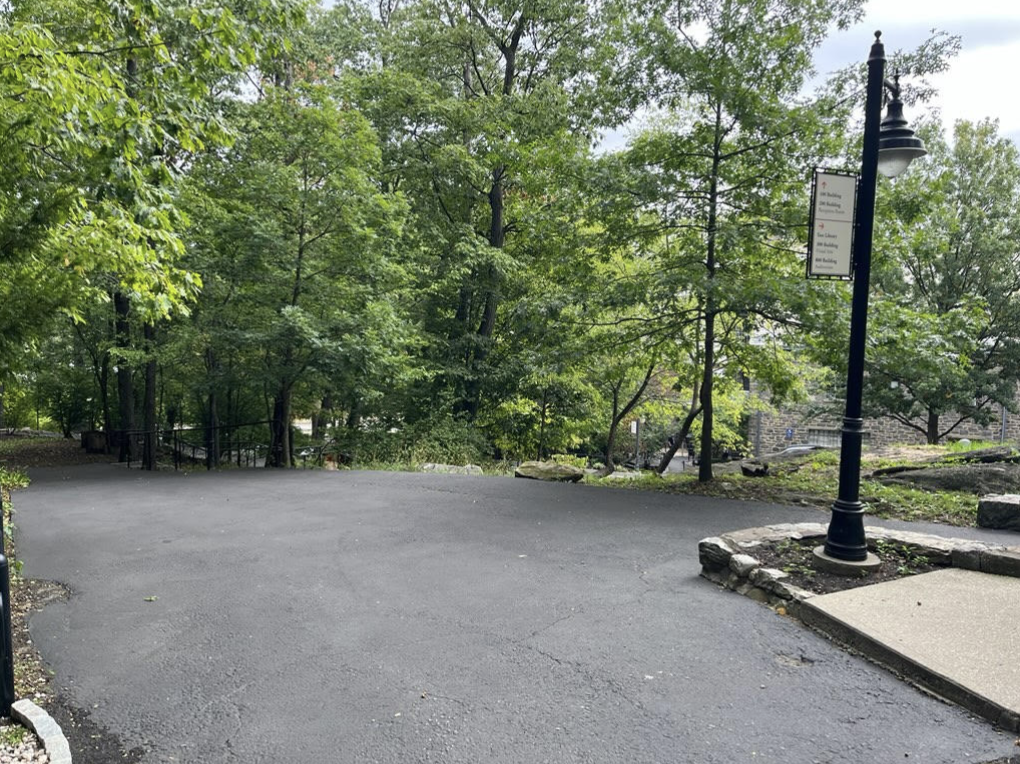
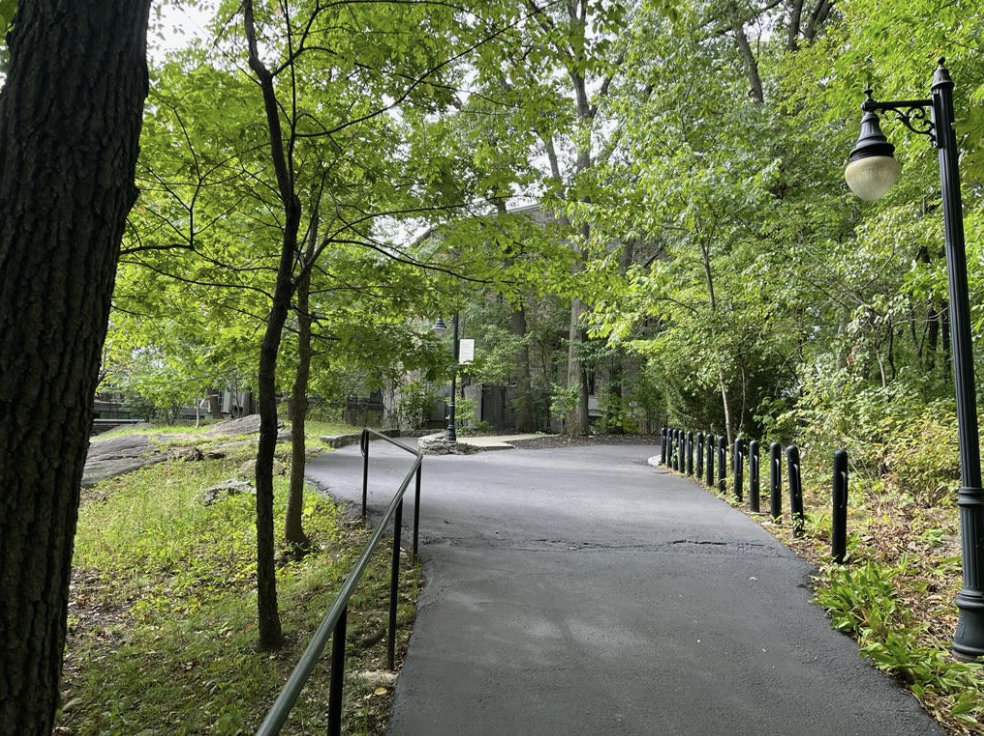
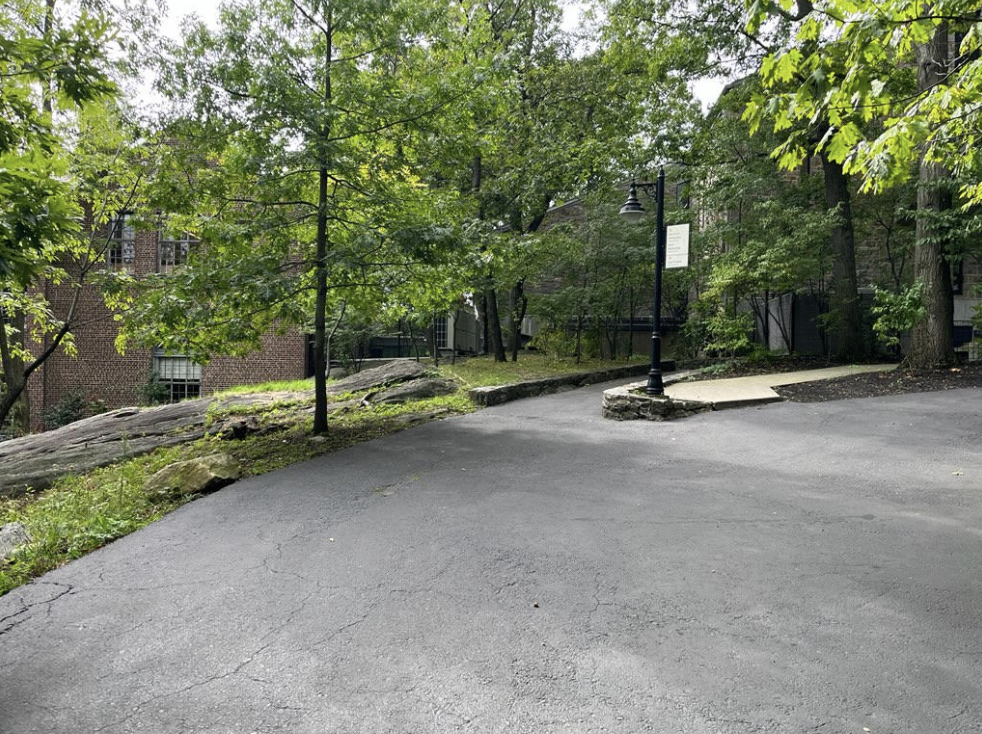
Once the building location was finalized, the Fieldston administration moved on to the next phase, a “continuation study” in Spring 2024. This phase included program validation, which ensured the new building would meet the spatial needs for science classes, electives and clubs. The goal was to prevent the new building from being outgrown quickly. The study also examined the current usage of science labs to determine the final layout, which will include six biochemistry labs, three physical science labs and a dedicated science research lab.
This past summer, the Fieldston administration entered the “design team procurement” phase, where proposals were sent out to select an architect, construction manager and geotechnical engineer. After interviewing eight architecture firms and eight construction management companies, the committee made its final selections and is now in contract negotiations. This process took several months and the final selections will be officially announced soon.
The next step for the committee is the “schematic design” process, which is expected to begin in January. During this phase, the design team will finalize the building’s layout, including floor plans and considerations for mechanical, electrical, plumbing and sustainability systems. In the summer of 2026, the school will take on some “make-ready” projects, such as preparing utilities and infrastructure, to accommodate the construction. Most of the construction work is expected to occur during the summer of 2027.
According to Fieldston Architecture teacher Marc Ganzglass, sustainability is a particularly pressing issue in the building’s construction. Ganzglass explained how important it is to consider balancing sustainability, preservation and innovation. A key goal is to create a space that maximizes long-term sustainability while respecting the history of our old buildings that have been around for more than 100 years. Ganzglass said, “The building’s design can have science as a guiding principle.” Students taking architecture at Fieldston discussed during class how this could mean drawing inspiration from natural scientific processes for the design. For example, the students discussed how the building can be visually designed around themes such as environmental science, genomics, physics and much more. Ideas ranged from utilizing the movement of sunlight throughout the day to maximize natural lighting to using rainwater to streamline water collection and reuse.
O’Rourke explained how the project has strived to implement similar sustainable architecture in the construction process. “You cannot build a science building without it also being a lesson itself… the building itself has to be a classroom,” he added. The committee is exploring various ways to incorporate sustainability, such as green roofs, rainwater capture, full building electrification, energy dashboards and the use of sustainable building materials such as timber wood, which has lower carbon emissions compared to traditional materials like concrete, brick and metal.
O’Rourke envisions a space that maximizes natural light and integrates seamlessly with the surrounding nature, taking advantage of the trees and rock structures on campus. A key priority for him is that the building includes spaces for small group work, meetings with teachers and events like the end-of-year science expo.
In addition to the construction of the new science building, the existing space in the 400s will undergo renovation. A new engineering lab will be added to accommodate the school’s growing engineering and robotics programs. This renovation will provide many benefits, creating additional lab space and enhancing opportunities for hands-on, innovative learning at Fieldston.
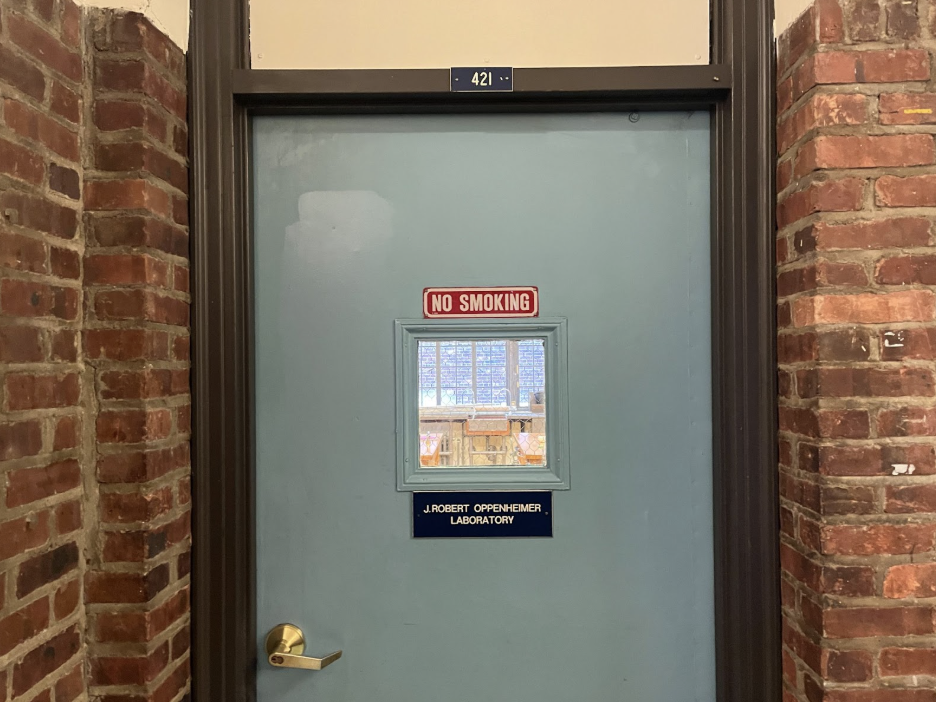
However, one drawback is that renovating the building would diminish its historical value. The infamous theoretical physicist Robert Oppenheimer graduated from the Ethical Culture Fieldston School in 1921. His family had close ties with Fieldston, and Oppenheimer’s younger brother studied in the same “Oppenheimer Lab” on the second floor of the 400s that Fieldston students use today. In that lab, there are scientific instruments dating back to the early 1900s. As campus infrastructures continue to become modernized, it is important to preserve the legacy of driven scientists like Oppenheimer, who once worked in those very labs, which will always be an irreplaceable part of Fieldston’s identity.
Although the school has just taken another major step in this project, the needs of the Fieldston faculty and students will ultimately shape the design and purpose of the new science building. Science is meant to be taught in a hands-on manner, not in traditional classrooms. Church referred to a quote in the 1989 movie Field of Dreams: “If you build it, he will come.” He explains, “I keep saying, we’ve already come, we need to build it. Okay?” We have many students who want to study science, and we now need the facilities to foster this passion. Church points out what science is all about: “it’s getting your hands dirty and actually doing the science, not just being told about it. You have to experience science.”

