

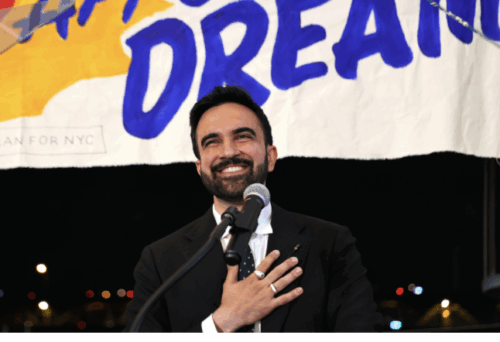
On November 4, 2025, New York City voters elected Zohran Mamdani as their new mayor, marking a historic milestone for the city. According to the official results, Mamdani secured just over 50% of the vote, defeating his two major rivals: former Governor Andrew Cuomo (running as an independent) and Republican Curtis Sliwa. Mamdani will officially take office on January 1, 2026, becoming the city’s youngest mayor in more than a century and its first Muslim mayor, as well as the first of South Asian descent.
Born October 18, 1991, in Kampala, Uganda, Zohran Kwame Mamdani moved to New York City when he was seven years old. He attended Bronx Science and then Bowdoin College, where he studied Africana Studies. Before his mayoral campaign, he served in the New York State Assembly, representing the 36th district in Queens (covering neighborhoods such as Astoria, Ditmars-Steinway and Astoria Heights) since 2021. His early career included serving as a housing counselor in Queens, where he helped low-income families avoid eviction. These experiences shaped much of his political messaging: affordability, housing, childcare and public transit.
The mayoral race itself had several notable features. The incumbent mayor, Eric Adams, initially sought re-election but withdrew formally upon deciding there was no realistic path to re-election. The Democratic primary saw Mamdani face off against Cuomo in a contest that many analysts and media sources framed as a battle between the party’s progressive wing and its more traditional wing. Despite polling that placed Mamdani behind for much of the race, he built momentum, drawing endorsements from progressive leaders and engaging a younger, diverse base of voters.
Mamdani’s campaign was defined by a few signature policy proposals. Among them are a freeze on rent-stabilized apartments, a free city-wide bus service, universal childcare, the creation of city-owned grocery stores to lower food costs and significant affordable housing development. In order to fund these initiatives, he proposed increasing taxes on the wealthy and corporations.
His victory is widely seen as significant, not only because of who he is, but for what it suggests about the city’s priorities. Many voters indicated cost of living, housing affordability and transit access ranked high among their concerns. Mamdani’s win is thus interpreted by analysts as reflecting a shift in what the city’s voters view as important and relevant issues.
Going forward, however, the challenges are substantial. Running New York City is complex. The budget is enormous, the issues are deeply rooted and successful implementation of ambitious policies will require navigating many obstacles. These obstacles will likely include cooperation with the New York City Council, the State government in Albany and federal authorities; all entities that necessarily play a part in programs like free transit or large-scale affordable housing; and responding to pushback from business interests, landlords and other stakeholders. In addition, because he is relatively young and lacks experience that some voters look for, there are questions about how he will handle crisis situations, build consensus and deliver on campaign promises.
For students and young residents of New York City, this election is especially important. The new mayor’s agenda addresses issues that many young people face, including housing costs, public transportation, education and economic opportunities. The fact that a candidate from a younger generation with immigrant roots won speaks to the evolving demographics and increased political engagement of the changing population in the city.
In summary, Zohran Mamdani’s election is both symbolic and potentially transformative. The symbolism lies in his background, age and his ability to connect with younger and more diverse voters. The transformative potential lies in whether his campaign ideas are implemented into policy and whether they lead to real change in the daily lives of the average New Yorker, particularly in areas such as affordability, transit and housing. For the coming term, what matters most will be how his administration turns ambition into action.
