

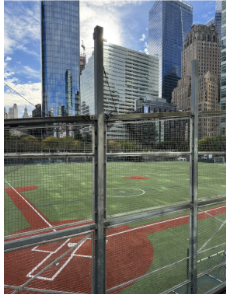
“Ding!” The crack of a bat against a ball still echoes through my mind, with the soaring glass skyline reflecting the sun onto the field. I spent my childhood rounding the bases at the Battery Park City (BPC) ball fields. Every time I walk by them I am reminded of late nights practicing with my dad or watching my brother play from the stands. I still play pick up matches now and then–soccer, baseball… whatever ball we bring–but the magic feels slightly altered by time.
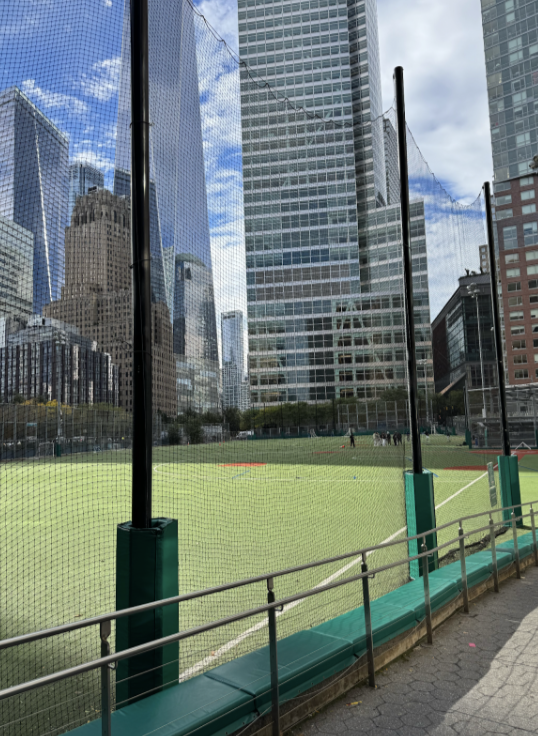
The View as One Enters the Ball Fields
Before 2003, the fields were nothing but empty ground. They were part of a grand design to include open recreational space in Battery Park City’s urban plan. The development of the ball fields was directly tied to the vision of building a livable downtown neighborhood with green space.
Santec, the firm behind the original project, emphasized sustainability and community access. They designed a dual-field configuration big enough for two little league baseball diamonds coexisting back-to-back. The lay-out also allows for a full-sized soccer pitch across the two fields. Over time, maintenance and climate demands made grass too difficult to maintain, so in 2013 Kelco construction and Michael Van Valkenburgh associates modernized the fields with custom synthetic turf, improved drainage systems and greener infrastructure. Superstorm Sandy in 2012 heavily damaged the ball fields, and played a part in the decision to make the field turf.
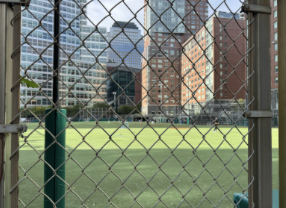
A Look Through the Fence Into the Ball Fields
Every few months, the BPCA reconfigures the fields. In March, they will switch them to a baseball/softball layout for the Little League Baseball season. In August, they shift to accommodate soccer, flag football, and other sports.
Located between Warren and Murray Street, the ball fields are tucked up against the Hudson River of lower Manhattan. They’re one of only a few places downtown where you can reliably find people playing, chatting, or hanging out with friends. On weekends, they overflow with community youth sports leagues, pickup soccer and casual games. A Downtown Soccer League player who chose to remain anonymous for this article said “[The ball fields] are such a special place to spend time in on the weekends.” Former DSL player Max Cenni added that the ball fields “are like a second home to him, with some of [his] fondest memories coming from playing DSL and pickup ball there.” Max’s sentiment resonated with others in the interview, with former Downtown Little League Baseball player and my brother Braden Pollack adding “they were my happy place.”
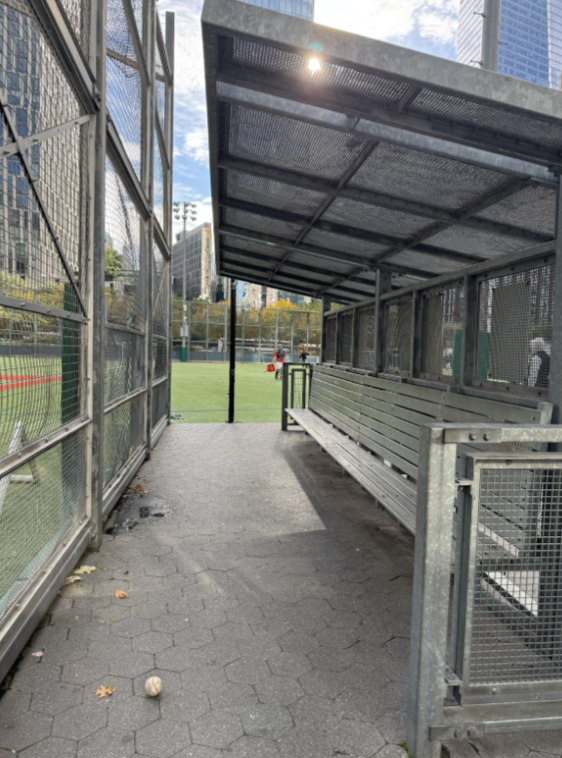
Inside a Dugout at the Ball Fields
At the ball fields, childhood dreams–sports, laughter and the burger after the game–are woven into the fabric of these fields. Just across the streets sits a DLL classic, Shake Shack, where all of the interviewees claimed to have eaten, as one of them put it, “countless times” throughout their little league careers.
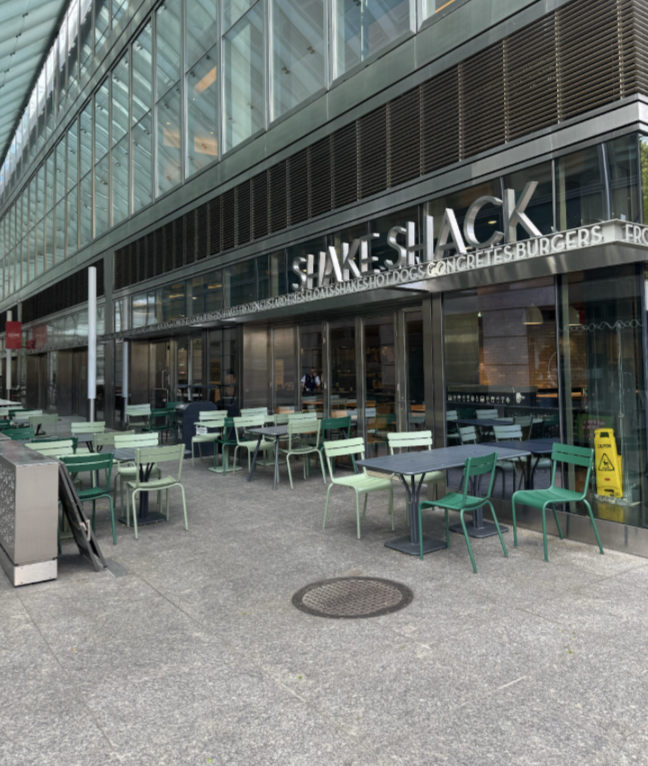
The Shake Shack Across the Street From the Ball Fields
For many in Tribeca, these fields are more than just turf and fences. They are a memory hub: a place where late night practices molded future stars, where friendships were created and where core family memories reside. Former DLL coach Jonathan Pollack, who had the pleasure of coaching both his kids’ baseball teams growing up, became emotional while being asked about his favorite times at the ball fields. He said, “The ball fields were a sacred place for my family and me. They are where I connected with my boys over our love for spending time together and playing sports. Coaching Braden and Evan were some of the happiest times of my life, and I’d give anything to be able to watch my boys play little league baseball again.” My family and countless others grew up with the ball fields as a constant, catching pop flies, learning sportsmanship and forging endless memories.
The Baseball league welcomes players from ages 4-16, beginning with The Rookies Division, where young athletes are introduced to the game through t-ball. As players progress, gloves and catcher’s gear are incorporated at age seven, in the Junior Minors 7 Division, emphasizing basic fielding and teamwork. Competitive structure begins to take shape at age ten with the AAA Minors Division, where playoffs officially start and players experience tournament play for the first time. The final year played at the ball fields is the Majors Division, for 12 year olds, marking the culmination of a player’s little league journey. From ages 9-12, teams are formed through a draft process following a preseason combine, allowing coaches to evaluate talent and ensure balanced, competitive rosters. Everyone gets to bat, but only the typical nine players will play in the field.
Though the fields have changed–new turf, drainage and periodic repairs–they remain, in many ways, the same. They are still a place for joy, competition, friendship and belonging. As Braden once said, “I can’t imagine a childhood without sports, and I can’t imagine sports without the ball fields.” For me, and many more, the ball fields are the heart and soul of home.
