

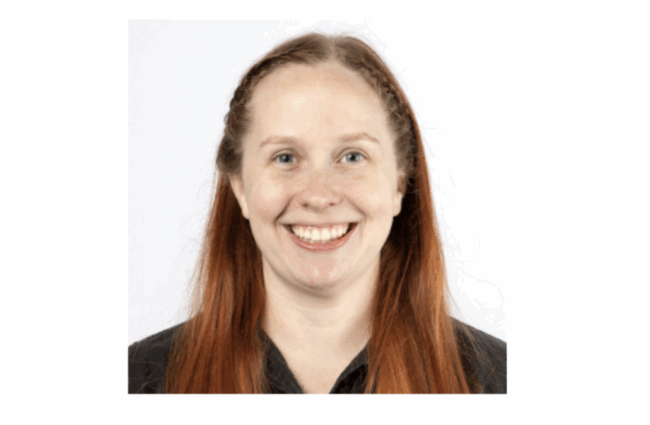
The new physics teacher, Becka Pouy, started at Fieldston this fall after working at a boarding school in Connecticut for 13 years. At her previous school, she worked six days a week, including working nights in the dorms.
As a child, Pouy attended many different types of schools, including homeschool, private, public and boarding school. When she attended boarding school as a teenager, she enjoyed the smaller class sizes because they led to deeper relationships with her teachers compared to the public school classes of 35 students. When Pouy started teaching, she knew that she wanted to get to know her students individually. Pouy shared, “I love hearing about what you do outside of class…now there is something I know that you are interested in that we can talk about.”
Additionally, for her students taking science research, Pouy is thoughtful about how she can connect. “If I know [a student] did science research, I know that I need to look up a couple things about her lab because it is not in my field, but now this is something else that I can talk to her about,” she said. Pouy chose to work in private schools because she values free periods to further get to know her students.
Pouy decided to become a teacher after working as a teaching assistant in an Intro to Physics lab in her sophomore year in college. When she started college, her dream was to become an astronaut. However, as she downloaded the NASA application in her freshman year, it denied those who sleepwalk, “And I do, so I had to find something else,” Pouy said.
She did not initially want to become a teacher. Her mother is a teacher and she wanted to do something different. Pouy’s brother works in science as well, as an organic chemist. She picked physics because it was something where she could not be compared to anyone else in her family, and she loved it.
Pouy enjoyed science throughout high school, but knew that she wanted to pursue her career in physics. “The first time I took physics was my senior year of high school, and I immediately loved it and decided that was what I wanted to do,” she said.
Source: ECFS Linkedin
One important lesson that Pouy learned in her first year of teaching was to never expect a lesson to go exactly as planned and to always have a backup plan. She explained that when she first started teaching, she taught math and science to sixth-graders. During a unit on symmetry, she wanted to do an origami activity because the folding created symmetry. Pouy expected to make several different creations, and she even brought in wire so that they could make origami mobiles.
It was her first year teaching, and she did not have a backup plan. Pouy never considered that her group of sixth graders did not have the fine motor skills required to fold little pieces of paper. They struggled through the activity, and everyone ended up frustrated by the end of the period. Now, if something does not go as planned, Pouy will have a backup plan.
Pouy emphasizes the significance of physics beyond Fieldston as well: “In physics, you learn how it is okay to make mistakes, how to be a strong critical thinker, and how to get stuck. I’ve had former students who have come back the following year and said that they didn’t realize how good physics was for me until after I was no longer in it. Science is easier now, math is easier, because it isn’t memorization. It’s all critical thinking.”
