From the lens of a South Asian: We’re not satisfied with just existing in American society; we want to shape it.
Some asked rhetorically: “If NYC has become New Yorkistan, does that mean that halal carts are finally getting recognition and protection like cultural landmarks?” I answer: Today I live in the northern part of “New Yorkistan,” in the Bronx, because Zohran Mamdani won the office of mayor on November 4th, of 2025. On election night, this city that never sleeps felt a little more awake, a little louder– and no, it wasn’t because of the trains being delayed or flooded- but because of the conversations in the nooks and crannies of bodegas, stoops, elevated rail lines, barber shops, and even Whatsapp statuses. The shift had been evident prior to news anchors announcing the news: New York City had “come in clutch” to elect its first South Asian mayor, Zohran Kwame Mamdani.
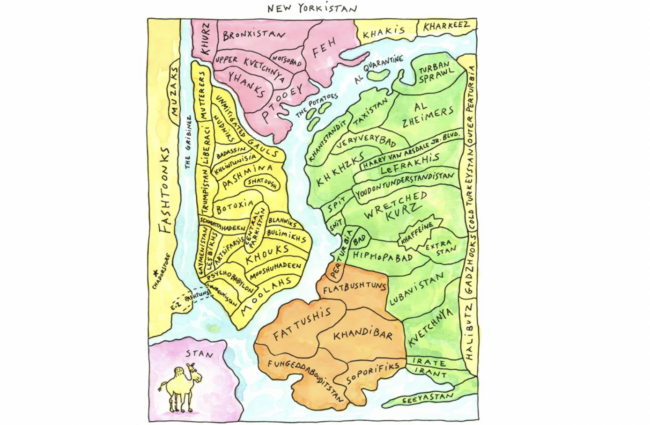
There were mixed perspectives, expressed left and right, on the internet. Some celebrated while others complained. Certain individuals (ideological opponents, republicans + conservatives, Islamophobes, etc.) went as far as to mockingly refer to our city as “New Yorkistan”– as if adding “stan” suddenly made our city foreign and exotic. South Asians reacted by “clowning” the racism right back. Memes flooded through the internet like monsoon rain. “Is this our sign to apply for dual citizenship?”
South Asians reacted to those loud and wrong by turning their narratives rooted in racism into comedy, not fear.
But these reactions go beyond the humor because there are layers and variations to them. South Asians are not a monolith. You could hear it through the subtle conversations across several communities that disclosed cynicism, curiosity, pride, and hope. A Bangladeshi cab driver said , “Let’s see if he follows through and delivers.” A Guyanese shopkeeper mentioned the rarity of seeing representation from “our part of the world.” Here was a minority voice that galvanized other minority voices. Young people reposting campaign videos with almost a sense of possession and pride, repeated the phrase “That’s my mayor!” I even recall a funny video of a young woman who happened to have the same last name as Zohran Mamdani’s. The caption went something along the lines of “My father had always said that us Mamdanis would do great things– and I guess Zohran is the first among us!”
And these all collectively illustrate the beauty of this moment.
This isn’t to say that Mamdani represents all of the South Asian community. He doesn’t– and he certainly shouldn’t. However, that fact doesn’t take away from his win, opening a political ceiling that South Asians are often seen to be denied. Other South Asians have been seen in positions like the NYC Council, and as a state representative, but this was the first time seeing a fellow South Asian as mayor. It’s also essential to note the large population of South Asians in the NYPD since they have a lack of representation as well. Mamdani is helping bridge that gap of representation as well.
For once, the iconic notion that “immigrants built this nation and this city” is seen in action at a large scale that cannot be ignored. It’s seen through the influence of immigrant communities in elections. It also went beyond statistics and numbers from a spreadsheet due to social media highlighting the reactions of the whole diaspora. The visibility and win didn’t whimsically create unity among all South Asians, but it certainly cultivated a shared moment of reflection transcending cultures that are often generalized and categorized as one.
This election also brought up the topic of belonging. About feeling and being seen in the city so many called home. The same city many were pushed out of due to unfair economic situations benefitting the wealthy and actively harming those that weren’t immensely wealthy. It also sparked conversations regarding what leadership looks like when highlighting and elevating identities, histories, and names that NYC has often neglected.
And so this article isn’t an attempt at capturing an individual “South Asian reaction.” That simply doesn’t exist among the nuances of our communities. However, this article does serve as a space containing some different perspectives of New Yorkers that identify as South Asians. These perspectives don’t represent any entire community, but they do come together to piece together a bigger vision of what Mamdani’s election signifies across the South Asian diaspora.
Interview with Najeedah Zaman: Bengali Political Science Student in Fordham University ‘29 (My Cousin)
1.Your perspective can’t represent the entire Bengali community, but from your personal lens, what did Mamdani’s win feel like to you?”
For me, Mamdani’s win felt like this strange mix of pride, relief, and almost… recognition. I’ve always felt deeply connected to my Bengali culture—I grew up in it, surrounded by it, shaped by it—so seeing someone from our broader South Asian and Muslim community win made it feel like our stories and our struggles finally reached a place of real visibility. It wasn’t that I felt disconnected before; it’s more that I never expected someone who shares pieces of my identity to break into a space that’s usually reserved for people completely unlike us. His win felt personal because it reflected a version of belonging that I’ve always carried quietly: the idea that being Bengali, being Muslim, being South Asian doesn’t have to be something you tuck away to succeed in America. And that meant more to me than I expected.
2) Do you think seeing a South Asian mayor shifted how you view political belonging in NYC?
It did. It made the idea of political belonging feel less theoretical and more real. Growing up in NYC, I’ve always known it’s diverse—you can hear five languages on one train ride. But political spaces never felt as reflective of that reality. Seeing a South Asian mayor didn’t magically fix anything, but it made the political landscape feel less distant. It made me think, “Maybe leadership isn’t just something we admire from afar; maybe it’s something we’re allowed to step into.” It felt like someone opened a door that we’ve always stood outside of, even though we’ve lived in this city our whole lives. I suddenly saw people like me as part of the political future here, not just the background of it.
3) Have you seen differences between how your generation and older generations reacted? What do those contrasts say about broader South Asian political identity?
Definitely. Older generations were proud, but they were cautious—almost like they didn’t want to get too excited in case something went wrong. Their relationship with politics is shaped by survival: immigration, assimilation, staying safe, staying quiet. For them, representation is nice, but stability matters more.
Our generation was different. We were excited in a much louder, more emotional way. For us, identity isn’t something we hide—it’s something we claim. We’re not satisfied with just existing in American society; we want to shape it. That contrast says a lot about the evolution of South Asian political identity. We’re shifting from survival mode to empowerment. From “let’s not draw attention” to “we deserve to be seen.” And Mamdani’s win kind of highlighted that turning point.
4) How did you feel watching some people react with Islamophobia or xenophobia to Mamdani’s win? And what about the ‘New Yorkistan’/‘Mamdanistan’ jokes?
The Islamophobia didn’t surprise me, but it still stung. Every time someone from our community rises, there’s always that backlash ready to drag them back down by questioning their identity, their loyalty, their legitimacy. It reminded me how quickly people are willing to “other” us—like no matter how proudly we call NYC our home, some people still think of us as guests.
But the ‘New Yorkistan’ and ‘Mamdanistan’ jokes? Those felt different. They felt more like reclaiming a narrative that has historically been used against us. It felt like South Asians taking control of the humor, turning something that was meant to belittle into something playful and empowering. I didn’t take those jokes as xenophobic—I took them as a reminder of the chaotic, meme-filled way our generation processes big moments. They felt like an inside joke we were letting the city be part of.
5) Even though no single community vote decided this election, do you think Mamdani’s win made South Asians feel more politically visible?
Absolutely. It wasn’t about numbers—it was about presence. It was about the way the city had to acknowledge us, talk about us, look at us directly. South Asians have always been here, working, contributing, raising families, running businesses, but we’re rarely seen as political actors. Mamdani’s win shifted that. It made a lot of us feel like we weren’t just part of the city’s cultural fabric—we were part of its political future. Even if we didn’t “deliver” the election, we were visible in the story of it. That visibility matters.
6) South Asia has so many internal differences—do you think victories like Mamdani’s make people reimagine what a collective South Asian political identity could look like?
I think wins like this push us to realize how much we share, even with all our differences. In South Asia, divisions are sharp—nationality, religion, caste, language—but in the diaspora, those borders soften because we’re all navigating the same experience of being brown in America. Mamdani’s win made people across South Asian communities feel connected, even if we’re from different countries or backgrounds. It showed that political identity doesn’t have to follow the same lines drawn back home. Here, our shared experiences—immigration, being racialized as one group, similar cultural values—can form a collective identity we might not have recognized otherwise. It’s not perfect, but it’s growing, and moments like this strengthen it.
7) How did you feel seeing media coverage describe South Asian voters? Accurate? Oversimplified?
It felt oversimplified, like most coverage about minority groups does. The media tends to treat “South Asians” like we’re one monolithic block with identical beliefs and experiences. They don’t acknowledge diversity—Bengali, Sylheti, Punjabi, Tamil, Muslim, Hindu, Sikh, first-gen, second-gen—all of that gets flattened. It’s frustrating because it erases nuance.
But at the same time, I’d be lying if I said it wasn’t meaningful to see us talked about at all. For so long, South Asians weren’t even part of political conversations here. We weren’t seen as a demographic worth analyzing. So while the coverage wasn’t perfect, it was still a step forward. I’m just hoping the next step is deeper, more accurate, and more reflective of the communities they’re actually describing.
Interview with Shaun Seneviratne: Sri Lankan Filmmaker & Educator
1) Your perspective can’t represent the entire Sri Lankan community, but from your personal lens, what did Mamdani’s win feel like to you?”
From a personal lens, this is a huge win for the psychic profile of the city. It is a win for hope. It’s a win for believing that something can be done to change things for the better and not play politics as usual. It’s a win for fresh ideas and perspectives. And yes, it’s a win for representation of South Asians and Muslims (but that said, that’s not the main thing on my mind — the ideas he’s advocating for are more important than identity).
2) Do you think seeing a South Asian mayor—regardless of nationality—shifted how you view political belonging in NYC?
Does seeing a South Asian mayor shift my view of political belonging in NYC… to be honest, not really. I think it’s really cool that he’s South Asian, and he’s someone that understands the culture and grew up with specific, relatable life experiences. But what’s more important are his ideas. If anything, the political belonging I feel is for a social democrat, leftist in office. Now the real question will be, “will he be steamrolled by the Democratic machine…” I hope not, but it eventually happens to everyone (look no further than AOC…).
3) Have you seen differences between how your generation and older generations reacted? What do those contrasts say about broader South Asian political identity?
There have definitely been differences in how different generations reacted to Zohran! Older folks tend to be more conservative, even if they are democrats. They are resistant to change and would prefer candidates who do things business-as-usual. Funnily enough, South Asians lean more conservative politically. They are generally upwardly mobile and are able to achieve positions of privilege and wealth, which they want to protect, leading to more individualistic politics. But then there’s A LOT of South Asians that do NOT fit into this mold, that are able to think of the collective, the impact on society. So I suppose, no different than other groups, there will always be a split between conservative and liberal leaning folks.
4) How did you feel watching some people react with Islamophobia or xenophobia to Mamdani’s win? Did the ‘New Yorkistan’ or even ‘Mamdanistan’ jokes online feel empowering, funny, or something else?
It’s definitely frustrating and annoying and infuriating. It all comes from a place of ignorance and fear mongering. The way these politicians are able to try to smear an opponent based solely on their identity should not be allowed. Cuomo’s campaign had so many ads (mostly made with AI) that painted Zohran in such a way that was meant to stoke fear. And if you’re stupid or ignorant, which to be fair a LOT of people are, then you take the bait. Same thing goes for the way he’s been characterized as “Anti-Semitic”. He is not, he just maintains a critical position on what is happening in Israel / Palestine. To have a position on that matter does not make someone “Anti-Semitic ” — this is an intentional tactic used to shut down debate or conversation.
There seems to be this false notion that a candidate’s cultural background is the primary driver of how they’ll reshape the world around them. Zohran is a New Yorker, who is also South Asian and Muslim. He’s fighting for the working class, no matter what background anyone comes from. He governs from a secular place, not one informed by his religious beliefs.
But stupid people are going to believe what they want to believe. In the post-truth world that we’re living in, the only truth you need to know is the one you believe (cue the societal collapse…)
5) Even though no single community vote decided this election, do you think Mamdani’s win made some South Asians feel more politically visible?
I think so. But we’ve had South Asian politicians before Zohran… they were all Republican though! Bobby Jindal, Nicki Haley, Kash Patel, etc. But I hope this makes the South Asians, and truly anyone that identifies as a Social Democrat, Socialist, Leftist, to feel less invisible and like it is politically viable to run for office. But we must remember — Zohran did not run ON identity. Identity politics don’t win anymore, and he knows that. Four years ago, that would’ve been the main driver of a campaign (which eventually leads to loss — see Kamala Harris).
But it is always nice to see someone from the community doing well. More South Asians may feel more politically visible and inspired to take part in politics. But it’s important to remember the other factors that made him win: his policies, the way he talks, his social media presence, the fact that he’s good looking and seems very friendly and genuine.
6) South Asia has so many internal differences—do you think victories like Mamdani’s make people reimagine what a collective South Asian political identity could look like?
No. We are all geographically from South Asia, yes, but our experiences and backgrounds are so vastly different from each other (religion, socioeconomic, “caste”, culture, food, language). In large coalitions, it requires a single united goal or mission. In coalitions like this, it seems prone to in-fighting and compromise and feeling like one group is being favored over another, leading to gridlock and nothing actually getting done. This seems to be an issue only on the left — the Republicans generally align behind a single core belief (even if that belief may be false).
To form a South Asian political identity, everyone will need to come together to identify what that actually is and what those goals look like.
7) How did you feel seeing media coverage describe South Asian voters? Did it seem accurate or oversimplified?
I feel like I didn’t actually see this media coverage. I did see, however, in Zohran’s videos, him speaking to South Asians from different class backgrounds. The auntie, the immigrant store owner, the college kid, etc. I think any attempt at reducing a human being to a monolith erases nuance, so I’m sure that’s how the media described it. No one identity thinks the same about things — we are all individuals with our own unique experiences that have shaped us. It’s perhaps better to not think of us as “South Asian Voters” and instead as “Voters, Who Are South Asian.”