Some might say, in the gentlest of terms, the financial world is constantly in flux. Others might say it is chaotic, unpredictable and maddening. Sometimes, it is just “made up.” Nothing is determined: company values increase and decrease, shares are being bought and sold and constant innovation makes it difficult to tell who the long-term winners will be. Over fifty years ago, in the 1970s, a new device began to play a role in finance that took every transaction by storm. It was called the computer. The introduction of the computer shifted the financial world into digitization; everything that was once officially written down and analyzed on paper was now accessible within a computer chip. With endless coding possibilities, the computer began to develop into an entity so complex that it could contain, manipulate and analyze entire networks of financial transactions. The modernization of the computer owes itself to the progression of how money is exchanged.
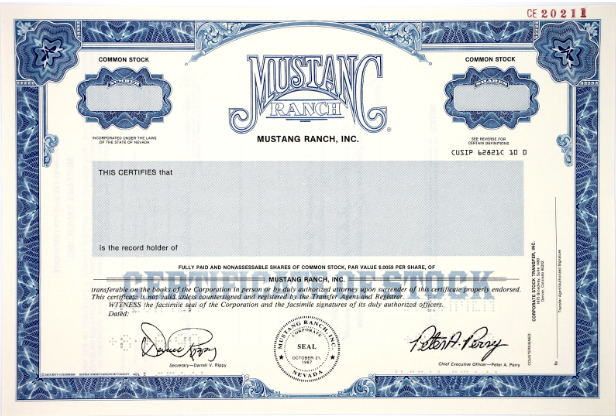
Wall Street began in the 1600s, but in the early 1900s it transformed into a system that allowed people to actually trade parts of corporations. Then, trading was still extremely primitive. People would trade by using physical stock certificates that you would manually move from one location to another in order to buy, sell and trade. The stock certificates themselves were “representations” of value, such as how paper money represented gold and silver. Through this method, trades could take five or six days to settle, due to how long it took to physically move the paper from one bank to another.
Things became more abstract in the 1970s, with the launch of the National Securities Clearing Corporation. Securities represent any sort of financial asset that can be traded. Because there was so much paper, physical stock, it would be too much for stock brokerages to exchange and calculate transactions for every person, leading to many closings and inefficiencies. The NSCC is a utility (many banks created a group together) that eliminates the need to manually move the stock, because it combines multiple steps of the transaction into a singular action. It creates a structure where, when a trade is made, one can just write down the subtraction of the shares from one person and the gain for another. Additionally, the NSCC ensures that people are being authentic when selling and buying. It’s become more secure since it was introduced over 40 years ago, and the idea that “if you physically possessed it, you owned it” faded into the past. It also guarantees a trade occurs, because if one side fails the NSCC still gives the money to the seller while simultaneously holding the buyer accountable to ensure fair trades. The system has remained in place for several generations.
Today, the finance world is approaching another structural change, and it’s one that could once again alter the entire financial services market. With the progression of the computer from a primitive device to one with great artificial intelligence and analytical power, as well as the acceleration of coding technology, every transaction can be settled and cleared almost immediately through something called blockchain technology. Although blockchain and Bitcoin go hand in hand, the idea for blockchain was born almost 30 years before. In 1982, a research student at UC Berkeley named David Chaum crafted a baseline for the blockchain, and then he later formed the blockchain into a storage unit for digital currency through his creation of a company called DigiCash. DigiCash then created new forms of cryptocurrency to be stored in the blockchain, which was constantly being revolutionized.
Blockchain goes hand in hand with another digital concept, cryptocurrency, which is exchanged through the blockchain. When you hear “cryptocurrency”, what do you think of first? Many common cryptocurrencies are Bitcoin, Ethereum, Solana, NFTs, Dogecoin and so many more. Before we can understand the incredible capabilities of computer algorithms and coding in the blockchain, we must understand the hierarchies of different cryptocurrencies. It started with Bitcoin, which was originally created as a replacement for traditional money. Bitcoin is distributed, meaning that it is open to everyone on their own computer blockchains. The Bitcoin database is also irreversible, meaning that you can’t undo a transaction once it is completed and entered into a block on the blockchain. It’s irreversible due to the fact that it’s decentralized, meaning that the network isn’t run by one specific person. A level down from Bitcoin, we have so called “utility tokens”, like Ethereum and Solana. The tokens aren’t physical entities, rather; they exist in a whole digital paradise.
When someone makes a transaction on one of these networks, they must pay the “gas fees”. This means that with each transaction, a small amount of the currency must also go to the network, because the person making the transaction is using the Ethereum network. The fees are calculated based on how many people are using the network at the given time, and people must pay the fees in tokens called “Eth” (pronounced ‘eeth’). Eth comes from the word “ether”, which is the actual name of the cryptocurrency, while Ethereum is just the network Ether exists on. This is different from the Bitcoin network, because on Bitcoin you can only send Bitcoin, while on Ethereum you can send other tokens. Bitcoin also has a fee, but it’s calculated based on the size of the transaction (how much of whatever currency you’re sending), or the amount of bytes in the block.
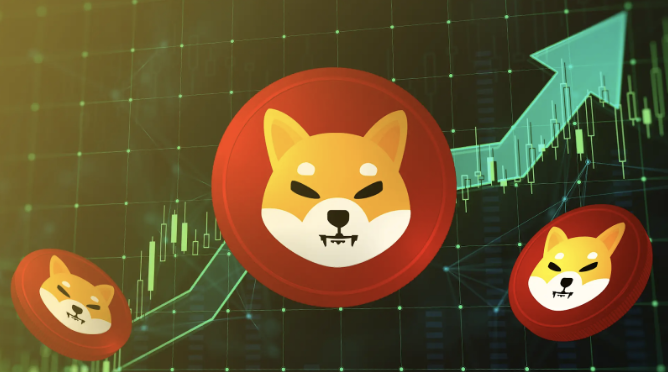
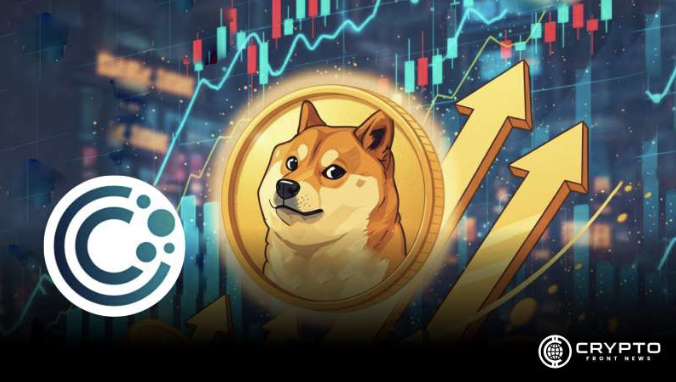
Finally, we have the cryptocurrency that is smaller than the previous networks and doesn’t really serve a main purpose. These are called the “memecoins”, such as Dogecoin and Shiba Inu, both types of tokens. The purpose of the memecoins is simply to push the boundaries of digital trade by creating variations that differ from Bitcoin or Ethereum, and all of them are completely made-up. Memecoins incorporate the more social aspect of cryptocurrency trade, because they often incorporate certain images or social media references that add a less serious aspect than Bitcoin. For example, the Shiba Inu coin is a cartoon picture of the actual dog breed, called a Shiba Inu, while Dogecoin is a common meme of a dog making a funny face.
So, there’s obviously endless possibilities as to what kinds of cryptocurrency you can trade, but how do you make these transactions? All of this currency is completely digital, stored inside computers. This is where the blockchain comes into play. Every person who participates in cryptocurrency trading has access to a blockchain, and each form of trade has its own blockchain. For example, there’s a specific blockchain for trading Bitcoin. The blockchain record is unchangeable, so once a transaction is made and recorded it cannot be altered. Each “block” on the blockchain contains specific data about a transaction. A person or a program enters the data into a block, and then it becomes permanent. But if anyone can enter any information into the blocks, how do we know it’s true? The blockchain has a way for validating each transaction so that a third party, some sort of “editor,” doesn’t need to go over each transaction, further widening the margin for error. Each block in the blockchain is given a hash. A hash is a string of numbers that serve as that block’s “fingerprint”, and it’s unique to that block based on the exact information entered. Each block contains the hash of the previous block, because that way you can check to make sure the hashes line up across each person’s blockchain within each block.
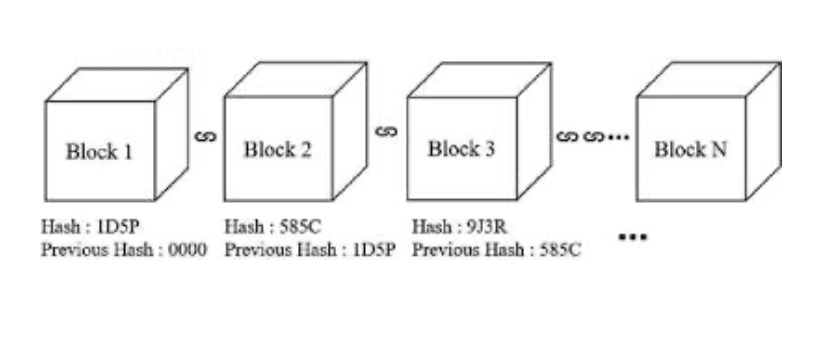
Additionally, each hash in a specific blockchain must follow a certain rule, like having four zeros at the beginning, similar to a routing number on a check. If someone were to try and alter the information entered into a block and lie about a transaction, the hashes would no longer follow the same rule, like having four zeros, and the block would be invalid in the blockchain. Because it’s actually a chain, you can cross check transactions with previous blocks. If someone received a certain amount of money in the second block, and then they give away another amount of money in the fifth block , you can look through the transactions on blocks three and four to ensure that the person actually has the money to give away. The blockchain is a shared database, and anyone has access to it across millions of computers, meaning that it’s maintained and controlled by all of the users. All users can see every transaction.
So why is the blockchain revolutionizing finance? Although we’ve made a ton of progress since the early 1900s, banking transactions can still take much longer than expected. Financial markets are all about timing. It all depends on when financial service businesses are open, and their schedule could lead to a person having to wait to receive money or cash a check. Banks are also run by humans, meaning not everything happens in the blink of an eye. The bank could have a lot of customers, and there could be holdup. One of the main differences between banks and blockchain– and the most impactful– is that blockchain is constantly open, 24/7, 365.
We don’t need to replace banks with blockchain; rather, combining the two will have an incredible effect on the financial services industry. By incorporating blockchain, customers don’t have to wait extended amounts of time due to a bank’s busyness; they can have their transactions processed quickly. Additionally, they don’t have to wait until after weekends or holidays— because the blockchain is always open, customers can process transactions whenever they desire. When banks are working with larger institutions on a transaction of funds, there is always a question of both speed and security. With blockchain, there can be a transfer that is both more efficient and more secure.
Blockchain also has its flaws. It has become a hub for criminal hackers, especially because nothing can be traced specifically back to one person. Dr. Heideman, a Fieldston Upper teacher, spoke on the downsides of cryptocurrency and blockchain, referencing an example about how hackers can hack into hospital systems and then demand money through a blockchain in order for the system’s control to be restored. In addition to this, he talked about “whales”, which are people who own massive amounts of cryptocurrency and can then manipulate the values of the Bitcoin blockchain. This is because the amount of people who hold portions of the Bitcoin blockchain is incredibly small compared to the amount of people who might hold shares of a company. The possible and easy alterations of the blockchain demonstrate how it has many unpredictable flaws.
Although blockchain’s main uses are through cryptocurrency and financial exchanges and it may have its downsides, it can be extremely beneficial for other industries, such as healthcare and the food industry, because blockchain is a massive storage unit for data in general. In the food industry, there have been outbreaks of medical conditions, such as E. Coli and Salmonella due to harmful chemicals or ingredients getting used in the foods that companies are selling. Since there are many steps that go into creating, packaging, selling and delivering food, it’s extremely difficult to find where the outbreaks originated from, or at what step in the process. When brands use a blockchain, they can track and log each step from where a product originates to its production and delivery steps. Through the blockchain database, companies can more easily recognize at what step in the process a product may have contracted a harmful disease. Using the blockchain can prevent the spread of diseases that can affect the lives of many.
In the healthcare industry, the blockchain is also used as an extremely secure, private digital storage unit. Medical records of patients can be entered into a certain block on the blockchain, and because the blockchain is unchangeable, the record is protected. Furthermore, the blockchain can be coded so that only a few people have access to it, maintaining trust and privacy with patients.
Blockchain can also be used in voting, because it practically diminishes the risk of election fraud. The blockchain is an immutable record, therefore making it extremely difficult if not impossible to alter the voting in any way. Because it’s a computer algorithm, the blockchain also gives results rapidly that are completely trustworthy, because we know they weren’t tampered with in any way.
Blockchain is truly an incredible invention. Although many have the irrational fear of AI and technology taking over the world– mainly due to crises being amplified by social media– blockchain isn’t a conqueror with a mind of its own. It can prevent diseases, keep information secure, provide more autonomy with finances and so much more. It’s revolutionizing the world for the better; change that isn’t scary or threatening. Blockchain is on the come up, and rather than trying to fight the unknown, the new, the change, we should embrace how it’ll alter our lives for the best.