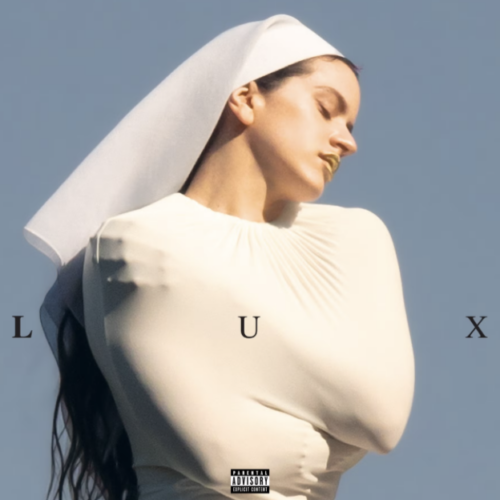
“Who could live between the two?” sings Rosalía as the opening lyric to her fourth album, LUX. The quote references sitting between humanity and divinity, but also the threshold that she inhabits: the line that divides pop and alternative music.
“LUX” is, simply put, a beautifully experimental project. Its fifteen tracks explore avant-garde pop through orchestral and vivid instrumentation; feature singing in fourteen languages, ranging from her native tongue, Spanish, to Sicilian and Mandarin; and tell the stories of Catholic saints that reflect her personal experience as a woman in the music industry. Aside from being an utterly beautiful and ambitious project, “LUX” symbolizes a broader shift in the music industry: one towards experimentation.
In 1991, “Nevermind,” “Achtung Baby” and “Dangerous” revealed that albums were shifting away from the glossy, synthesizer-full 80s sounds and into something stranger and progressive for the time. These sprawling works of art played with new genres for each artist, but also served as a way to bring experimental sounds into popular culture.
“LUX” serves that same purpose as the three aforementioned 1991 albums, to show that we aren’t in the midst of an arrival to experimental popular music, but rather a signal that we’ve already gotten there. On a track like “Porcelana,” Rosalía smudges the border between pop and alternative as she merges baroque production and storytelling (she tells the tale of Japanese monk Ryōnen Gensō) with modern pop melodies; a method entirely new to the chart-topping and record-breaking releases. Speaking of record-breaking releases, this non-traditional pop record opened with an astonishing forty-two million streams, a statistic unheard of for an album of this sound. On another song, “La Yugular,” she sings opera in Arabic, English and Spanish as she tells the story of Islamic Golden Age poet Rabia Basri and contemplates her love life. “Sauvignon Blanc” is dedicated to Saint Teresa of Ávila as she sings about giving up external wealth for internal richness.
Rosalía isn’t barging into the mainstream and saying that classical music should be a part of popular music; she’s forming a turning point in music. “LUX” is a shift similar to what happened in the 90s: moving from polished, commercialized formulas to daring, uncharted territory. The people are once again ready for the change. As shown by the monumental streaming numbers, experimentation is no longer a niche pursuit; it can now thrive at the top of the charts.
“LUX” is more than just a beautiful album; it is a harbinger of the ever-fading line between pop and alternative genres.