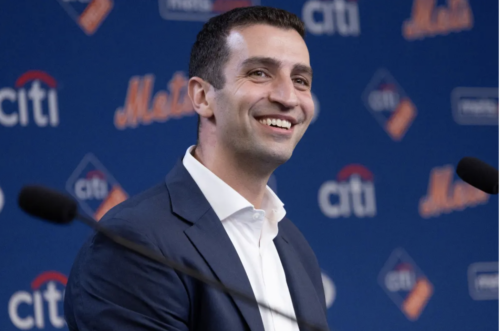
The Mets recently surprised the baseball world when they traded away longtime outfielder Brandon Nimmo to the Texas Rangers in exchange for veteran infielder Marcus Semien. That surprise didn’t compare to the shock that Mets fans and baseball fans alike felt when Mets’ president of baseball operations David Stearns allowed two players often considered essential to the team’s success to walk. In analyzing Stearns’ cautious behavior, though, it becomes clear that moving on from Edwin Díaz and Pete Alonso will allow the Mets to construct a roster built for playoff baseball.
Tuesday, December 9, Edwin Díaz, an elite reliever and the Mets’ closer since 2019, signed a three-year, $69 million deal with the defending champions, the Los Angeles Dodgers. Though the contract calls for Díaz to make $23 million annually, he will only make about $18.5 million per year, with $4.5 million in deferrals each season. The Mets’ final offer to Díaz came in at three years for $66 million, with slight deferrals.
Just a day later, Pete Alonso, a Mets second-round draft pick and starting first baseman also since 2019, signed a massive five-year deal with the notoriously stingy Baltimore Orioles worth $155 million. It was soon revealed that once it was clear that Alonso was poised to get a deal for around five years with an average annual value (AAV) around $30 million, the Mets and Stearns didn’t make a formal offer to Alonso.
Since the finalization of Díaz and Alonso’s deals with their new teams, Mets fans and baseball analysts across the country have been vocal in their disapproval of the Mets’ plans. Former Mets’ first baseman and current SNY broadcaster Keith Hernandez called the lack of interest in Díaz and Alonso an “explosive…profound” decision, claiming that he was left “speechless” by Stearns’ actions. Ron Darling, former Met pitcher and teammate of Hernandez and current SNY broadcaster alongside Hernandez, explained that he was “flabbergasted” that the Mets didn’t enthusiastically pursue Alonso. Darling argued that without Alonso’s daunting bat in the batting order after star right fielder Juan Soto, the Mets have “now paid, unless [they] get a bat, Juan Soto to walk 150 times a year. That’s what you’ve done.” Jon Heyman, a New York Post baseball columnist and MLB Network insider, went as far as to say that with the departures of Alonso and Díaz, the Mets “look like a 70-win team.” Mets fans of varying intelligence across my Instagram feed have echoed Heyman and Darling’s negative sentiment, criticizing Stearns for letting a cornerstone for the Mets over the past seven seasons walk, not putting up any fight.

And it may seem that Heyman has a point: on paper, the Mets don’t have much to offer. Other than Soto, Semien, a newly signed closer in Devin Williams and the informal captain in shortstop Francisco Lindor, the Mets 40-man roster is extremely weak and porous. Despite the holes, Stearns has a plan for the Mets that, if put in place properly, will result in an incredibly successful season that goes beyond the Mets’ patented meaningful September games.
To see what Stearns sees, it’s imperative to understand that the Mets haven’t been successful since 2015. Every roster since then has failed: notably, in 2022, even though they accumulated 101 regular season wins, a three-game Wild Card series hosting the San Diego Padres sent the Mets to Cancún; and in 2024, a seemingly-fluky postseason run ended in when the Dodgers outplayed first-year manager Carlos Mendoza’s Mets in six games. In recent years, even with Alonso averaging nearly 40 home runs per season and Díaz pitching to a sub-3.00 ERA, the Mets haven’t reached a single World Series. There have simply been too many problems around them.
Fittingly, Stearns saw two options: the first, to target Díaz and Alonso, only to end up with weak starting pitching and a weak bullpen that can’t sustain itself in the playoffs after Mendoza’s heavy usage throughout the regular season; the second option, to understand how overvalued Díaz and Alonso really are, and instead of overspending on two slightly-above average players and hoping that they can propel the team to victory, to utilize the Mets’ resources with MLB’s richest owner Steve Cohen to create a well-rounded roster that can compete in October. Sounds familiar? It should, because Stearns is approaching the offseason as Billy Beane and the Oakland Athletics did in their renowned 2002 Moneyball season, only with a few more hundreds of millions of dollars.
Losing Díaz
In case it’s not clear by now, the Mets have already solved the issue of losing Díaz by signing Devin Williams to a three-year, $51 million deal with $5 million yearly in deferrals. Williams had a down year in 2025, his first in New York, pitching to a 4.79 ERA with four blown saves over 62 innings. Looking deeper into the numbers shows that the season was an outlier. From 2020 to 2024 with the Milwaukee Brewers, Williams’ highest ERA in a season was 2.50 (his lowest was 0.33). For reference, with the Mets, Díaz had seasons with ERAs of 5.59, 3.52 and 3.45. In 2025, despite the sub-par statistics, Williams’ expected batting average against (xBA) was .195, the 95th percentile, and his expected ERA was 3.09, more than a run-and-a-half lower than his actual ERA. Moreover, as often is the case, coming to a new team, especially one with as much intensity as the Yankees, can involve time for adjusting. Williams struggled to adjust to the New York atmosphere, but once he did, he became the lights-out reliever that he consistently was in Milwaukee: from August 10 to the end of the season (including in the playoffs), Williams allowed runs in only two appearances and struck out 38 batters in just 22 innings. Though on a new team again Williams may struggle early on, expect him to return to his status as an elite closer with the Mets, getting paid $6 million fewer than Díaz per year.
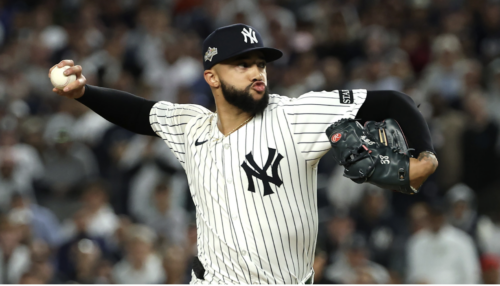
With the extra money, Stearns will work to solve one of the Mets’ eternally largest problems: the bullpen. Mendoza wears down his bullpen throughout the regular season, often using six or seven pitchers in a single game. A key to creating a successful roster is durability, and it starts in the bullpen. Every season in my fantasy baseball auction, I force myself to forgo the best and most expensive relievers, as every reliever has the same ceiling. But when signing the most highly-touted relievers, you pay directly for the ceiling and not for the upside. The same applies to the Mets and Stearns: there’s no reason to pay directly for Díaz’s ceiling when, first of all, he likely won’t reach it, and second of all, relievers who’ll likely finish with lower ERAs and maybe worse strikeout rates than those of Díaz are available for fractions of Díaz’s price. The Mets already have elite lefty Brooks Raley (2.47 ERA in 87.1 innings as a Met), fellow veteran southpaw A.J. Minter and former Chicago Cubs’ closer Adbert Alzolay returning from injury and should seek multiple skilled, less expensive relievers going forward, hopefully two or three out of Drew Smith, Pete Fairbanks, Danny Coulombe, Chris Martin, Caleb Thielbar, David Robertson, Jason Foley and Luke Weaver.
Losing Alonso
Losing Alonso opens up multiple options for the Mets’ first base spot in 2026 and for the rest of the lineup. The loss could hurt the Mets at first base, but it could also help them tremendously. Much of Alonso’s value comes solely from America’s longstanding obsession with “the long ball,” a feat in which Alonso is prolific: in seven seasons starting at first base for the Mets, he’s averaged approximately 38 home runs and 102 RBIs per season. These two stats are incredibly appealing, especially to the modern fan who goes to the ballpark wanting to see home runs, not walks, singles or anything else small-ball-related.
Alonso’s cost, $31 million per year, values him as an elite first baseman, with an AAV lower than only one other first baseman, Vladimir Guerrero Jr. But Alonso is only elite in the two aforementioned statistics; analyzing him in every other measure reveals his many Achilles heels. In each of the past three seasons, Alonso has finished with a well-below average in speed, arm strength and defensive range, making him one of the league’s worst defenders. Not to mention, he channels his inner-Mackey Sasser every time that he attempts to throw the ball to second base. Even on offense, over the past three seasons, Alonso has averaged an on-base percentage of .332, only .16 points above the league average over that span; his batting average since 2023, .244, falls below the league average; and even with averaging 39.3 home runs over those three seasons, his OPS of .827 and 162 strikeouts per season (yes, one per game) reveals that he is a one-trick pony who has greatly declined in value since his heroic rookie season when he hit 53 home runs, drove in 120 runs and had a .941 OPS.
Further, Alonso is already 31 years old and will be 35, somehow even slower and worse defensively than he already is, when his contract with Baltimore runs out.
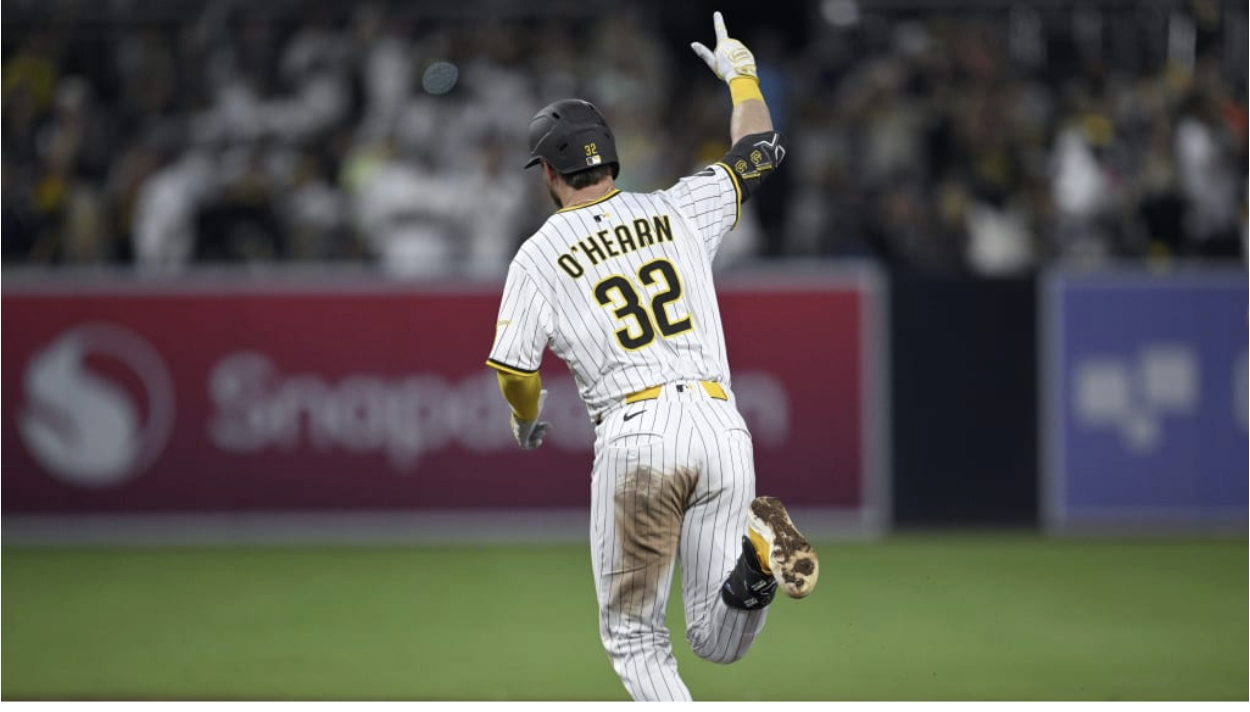
Stearns saw Alonso’s decreasing value (worsened by his past-prime age) and immediately realized that there were better deals on the table that would allow him to also improve the Mets at other positions. I see three directions in which Stearns could go for first base: the first, to sign 32-year-old Ryan O’Hearn, who, after the Kansas City Royals wasted him for five seasons, has revived his career over the past three seasons, batting .277 (much better than Alonso) with a .343 OBS (also better than Alonso) and a .788 OPS (slightly worse than Alonso). O’Hearn also has above-average speed and holds elite range at first base, finishing in the 89th percentile in 2025 in outs above average (OAA). The Mets could likely sign O’Hearn, who also has experience at both corner outfield positions, to a two-year deal worth about $25 million total, and they would receive someone with arguably more value than Alonso and be able to pursue more expensive pieces elsewhere.
The second option, to sign three-time batting champion Luis Arráez. In 2025 with the San Diego Padres, Arráez had his version of a down year, batting .292/.327/.392. The OBP is a little low, and it might seem that it would always be that low due to his lack of walks, but in the three previous seasons, his OBP averaged to .371, a well-above average mark. Arraez, who batted .328 from 2022 to 2024, has the best bat-to-ball skills in the league, finishing with the best strikeout rate every season since 2021. Ron Darling warned that getting rid of Alonso will invite pitchers to pitch around Soto, but acquiring Arraez (or even O’Hearn, who had above-average strikeout and walk rates in 2025) and putting him behind Soto in the lineup would force pitchers to attack Soto. Arráez also has valuable versatility, with extensive experience at second base and some at third base and in left field, so when the Mets start to pile up injuries as they tend to do, Arráez could fill a void that Alonso, well, couldn’t.
The third option, to stay within the organization. Already on the roster the Mets have Brett Baty and Mark Vientos, primarily third basemen who’ve shown sparks of power. Vientos, especially, who batted .266 with 27 home runs and a .837 OPS in 2024, could very well become an above-average power hitter with a higher average than Alonso.
Remaining within the organization also means giving prospects a chance at the big-league level. What’s happened in the past—drafting and developing (or trading for) exciting prospects then only giving them two or three starts per week at the big league level because a veteran free agent signing has to play—cannot continue to happen. Even if the free agent were good, which they rarely are, sporadic playing time destroys the potential in the prospects. The Mets have already done this to Luisangel Acuña and are in danger of doing it to Ronny Mauricio, as well. Ryan Clifford, whom the Mets acquired along with outfielder Drew Gilbert in 2023 when they traded Justin Verlander back to the Houston Astros, deserves a shot at first base at some point in the near future. The 22-year-old still has to work out his chasing and striking out problem, but in 139 games between AA and AAA in 2025, Clifford hit 29 home runs, drove in 93 runs and had an OPS of .826. I’m not saying he’s big-league ready now (he’s not), but if he can prove himself at AAA early on in 2026, he should get a real shot, starting every game for a few weeks, to be the Mets’ starting first baseman.
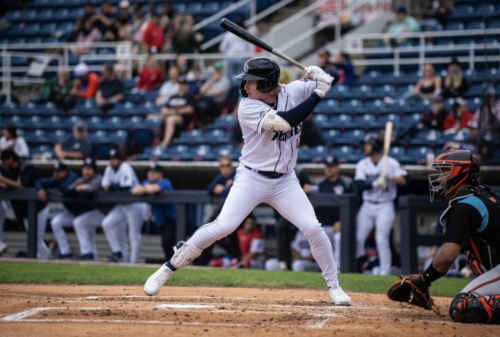
Japanese star slugger Munetaka Murakami has been mentioned as a potential fit for the Mets, but given his alleged dreadful struggles against 93+ MPH pitches in Japan, he need not be seen as a good fit (for any team).
Losing Alonso and Díaz gives David Stearns so many ways to make the Mets a team built for success in 2026 and beyond. He can now build a durable bullpen, built to withstand Carlos Mendoza; he can make a starting rotation that, maybe, won’t need as much bullpen help, with free agents like Framber Valdez or Ranger Suárez, who both averaged over six innings per start in 2025; he can create a lineup to surround Juan Soto that will tear up starting pitching; without having to pay Alonso, he can pursue a fancy free agent hitter actually worth the money, like Bo Bichette, Cody Bellinger or Kyle Tucker.
We Mets fans must understand that having a rich owner in Steve Cohen doesn’t translate to reckless spending. This becomes especially true with David Stearns—whose ethos from his time in Milwaukee involved searching for the best deals to find success—as the president of baseball operations. The Mets have a great season in store. The team will look incredibly different, but it has the potential to be better and more complete than any team since 2015.