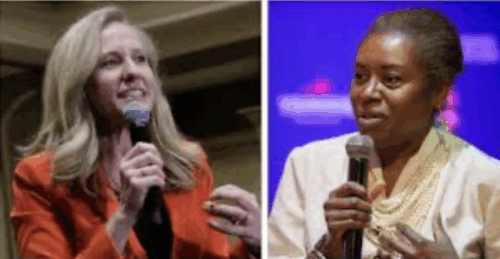
The 2025 Virginia gubernatorial election, held on November 4, 2025, is one of the most closely watched state races in the nation. Because Virginia law bars governors from serving consecutive terms, current Governor Glenn Youngkin, a Republican, could not run again. This has created an open-seat race between two historic candidates: Democrat Abigail Spanberger, a former U.S. Representative and CIA officer, and Republican Winsome Earle-Sears, the state’s current lieutenant governor and a Marine Corps veteran. As of earlier this month, Virginial elected its first female governor, marking a major milestone in the state’s history.
Virginia’s gubernatorial races are known for being political bellwethers. They are held in off-year cycles – one year after presidential elections – and often reflect voters’ sentiments about the national political climate. For decades, Virginia voters have tended to elect a governor from the opposing party of the sitting U.S. president, which is why many analysts watched this race as an early indicator of public sentiment following the 2024 presidential election. Because it is one of only two states electing a governor in 2025, the Virginia race has garnered national media attention, sparked major fundraising efforts, and attracted a surge of outside spending from both parties.
Abigail Spanberger, the Democratic nominee, built her campaign around themes of competence, moderation and bipartisanship. Her background in national security and her reputation as a centrist in Congress have made her appealing to suburban and independent voters. Spanberger has focused her messaging on economic issues, including lowering the cost of living, improving public education and protecting reproductive rights. She has also reached out to Virginia’s growing Latino population with targeted Spanish-language advertisements emphasizing affordability and family stability. By mid-2025, she raised more than twice as much campaign funding as her opponent and led most public polls by comfortable margins.
Winsome Earle-Sears, the Republican nominee, brought a very different profile. A former Marine and small-business owner, she had served as lieutenant governor since 2022 and is the first woman of color to be elected statewide in Virginia. Her campaign focused on conservative priorities, including tax cuts, support for law enforcement and promoting parental rights in education. Earle-Sears positioned herself as a champion of traditional values and a critic of what she calls “government overreach.” However, she faced challenges in expanding her appeal beyond the Republican base, especially in suburban areas that trended Democratic in recent elections. Despite these obstacles, she maintained strong support among rural voters and conservatives who hope to continue Governor Youngkin’s policy agenda.
The key issues that shaped the 2025 race reflect both local and national concerns. Voters consistently rank inflation and the high cost of living as their top priorities. Spanberger highlighted policies to make housing and healthcare more affordable, while Earle-Sears emphasized tax cuts and deregulation. Education has also been a major flashpoint, with both candidates offering sharply different visions for public schools and parental involvement. Reproductive rights and LGBTQ+ issues also energized both sides: Spanberger supports protecting abortion access, while Earle-Sears backs restrictions similar to those in neighboring southern states. Immigration and crime further divided the candidates, with Earle-Sears advocating stricter enforcement and Spanberger calling for pragmatic reform.
Polls conducted throughout 2025 consistently showed Spanberger leading, although the margin fluctuated. A summer poll from the Wilder School at Virginia Commonwealth University showed Spanberger ahead 49 percent to 37 percent. Later surveys, such as those from Roanoke College, found the race tightening slightly but still favoring the Democrat. Spanberger’s fundraising advantage has also been significant, as she has consistently outpaced Earle-Sears in both donations and cash on hand. Analysts suggest that the Democrats’ edge in suburban and independent voters proved decisive, though lower turnout in off-year elections always makes outcomes uncertain.
Beyond the candidates, this race carries broader political implications. It will determine whether Virginia continues its recent trend toward Democratic leadership or swings back toward the GOP. With both candidates representing historic firsts, the election also underscores the growing diversity of Virginia’s electorate. Nationally, the contest is being viewed as a referendum on the political climate following the 2024 Presidential election.
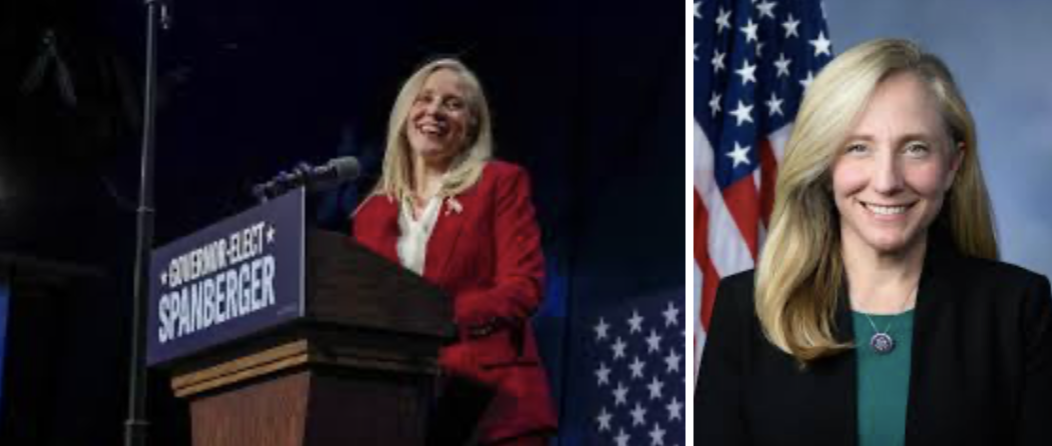
Source: Wikipedia Source: Instagram – @abigailspanberger
As Election Day approached, both campaigns intensified their efforts to mobilize voters through early voting, rallies, and local outreach. For Virginians, the decision came down to two sharply contrasting visions for the state’s future: one centered on bipartisan pragmatism and social moderation, and the other on conservative reform and traditional values.
Spanberger’s win signals that Virginia voters were looking for steadiness, moderation, and solutions that feel practical rather than ideological. Because she built her campaign around affordability, education, and protecting reproductive rights, her administration is expected to push hard on lowering the cost of living, expanding access to health care, and strengthening public schools. Her strong support among suburban and independent voters also means she’ll likely continue emphasizing bipartisan cooperation – not because it sounds nice, but because those voters expect her to actually deliver it. At the same time, her victory gives Democrats momentum in a state that has leaned blue in recent cycles, and it positions Virginia as a testing ground for centrist, coalition-building politics in the post-2024 landscape.