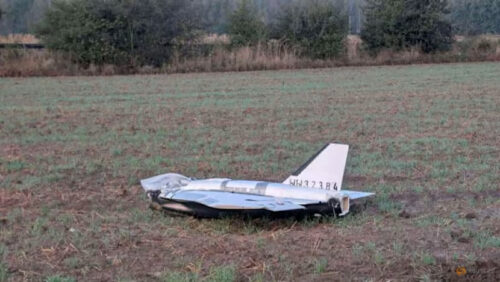
“It’s …Russia, conducting its hybrid war,” said Polish foreign minister Radosław Sikorski, after Russia launched as many as 23 drones into Polish territory, forcing NATO and Polish aircraft to intercept the drones.
These exchanges took place between September 9 and 10, in the midst of a Russian attack on Ukraine, prompting Poland to invoke NATO’s Article 4 – allowing any member state to request consultations with other allies when it believes its territorial integrity, political independence, or security is threatened. This is the first time during the Ukraine war that NATO has engaged a threat in allied airspace, provoking worry and panic amongst NATO countries and their populations.
The motive for such bold moves, however, has been disputed amongst Western leaders. Polish, Lithuanian and Ukrainian officials in a joint statement have claimed that the incursion was a “deliberate and coordinated strike constituting an unprecedented provocation.” Yet some analysts and US intelligence officials in Trump’s cabinet have raised the possibility of the Russian drone attacks being accidental, as Trump and his cabinet believe they handled Putin, and were able to ‘put him in his place’. Russia has denied that its drones deliberately targeted Poland, and that its drones veered off course by accident, having no intent of violating Poland’s airspace. However, this is a claim that is widely rejected by Polish officials and other European leaders.
The Minister of Foreign Affairs for Ukraine, Andrii Sybiha, posted on X, “Russian drones flying into Poland during the massive attack on Ukraine show that Putin’s sense of impunity keeps growing because he was not properly punished for his previous crimes. Putin just keeps escalating, expanding his war, and testing the West.”
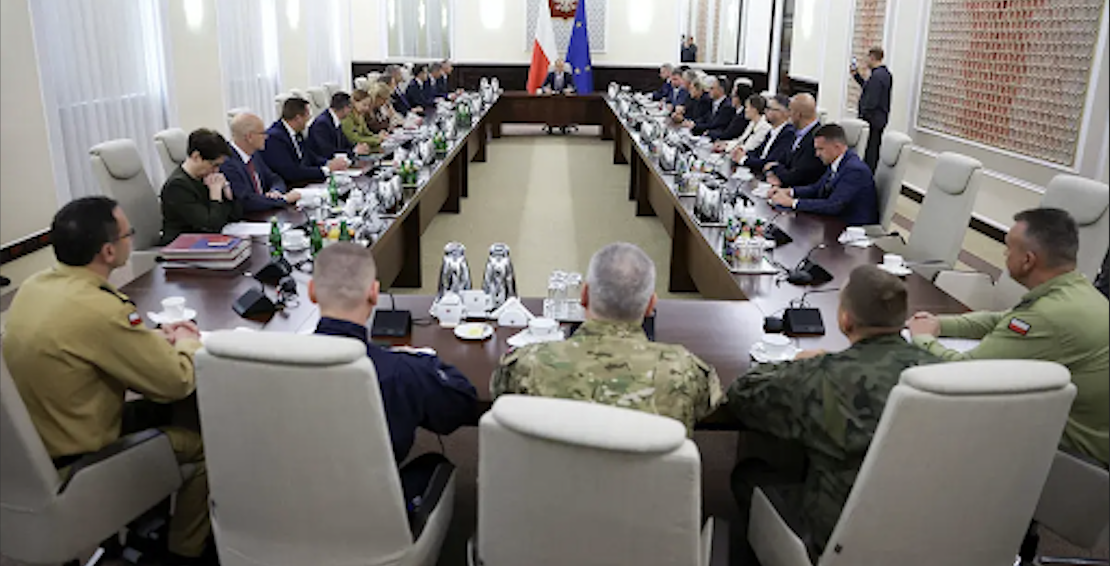
On September 23, the NATO council released a statement expressing solidarity with Poland and condemning Russia’s “reckless” and “escalatory” behavior. President Donald Trump wrote on Truth Social, “What’s with Russia violating Poland’s airspace with drones? Here we go!” Back in mid-August, president Trump invited president Putin to a summit in Alaska in hopes of pursuing peace. This was a symbolic meeting, since this was the first time since the start of the war in 2022 where the two heads of state met in-person. However, the summit ended without securing a ceasefire agreement on the war in Ukraine, and the meeting was widely seen as a diplomatic victory for Putin; Trump was criticized by many for his perceived shift toward the Russian position with critics claiming that Putin is irresponsible and not-trustworthy. After Trump realized that his authority meant nothing to Putin, and his horrifying war on Ukraine continued even after the summit, he began lashing out at Putin all over his social media accounts and during talks with the press. “Every conversation I have with him is a good conversation…And then unfortunately, a bomb is loaded up into Kyiv or someplace, and then I get very angry about it.”, Trump told reporters on August 26. Additionally, prior to the summit, Trump warned Putin that if he did not agree to stop the war there would be “very severe consequences”, though he did not specify what they would be.
Recently, several other NATO countries have faced drone incursions from Russia, such as Denmark, Romania and Estonia, causing the NATO reaction to intensify; with the aim of “putting Russia in their place.” Many European leaders have suggested stronger and more effective sanctions on Russia, reducing Russian oil and gas purchases, in addition to other economic sanctions.
I recently had a conversation with Vikram Keetha (Form III) who commented “Russia is trying to prolong the war in Ukraine by intimidating other countries around them, and also proving to other countries that they’re still powerful.” I went on to ask him how he felt about the safety of NATO countries, and the western world, and he responded with, “Right now, I’m not so worried about this escalating, because in the modern day, there’s lots of drones and other things being launched to different countries to keep them in check. Remember the Chinese spy balloon from last year; that was shot down and nothing really became of that.”
As the aftermath of this conflict continues to intensify, with NATO spy planes patrolling Eastern Europe airspace, and Trump and Putin both threatening each other,the Western world is in a difficult position. Whether the drone incident was an intentional provocation, or a costly “mistake,” it underlines the true fragility of the region and its vulnerability to a multi-nation war, pulling the rest of Europe and North America deeper into an already complex conflict. As a result of Trump’s naive attitude toward Putin, Russia has been increasingly emboldened to test NATO’s defenses – leaving allied nations on edge and forcing the alliance to confront a daring adversary.