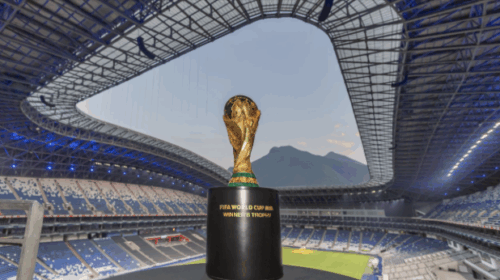
The FIFA Men’s World Cup comes to North America next summer. This means a summer of soccer matches held in 16 cities in Canada, Mexico and the United States. The last time the US hosted the World Cup was in 1994 with Brazil winning. 30 years later the World Cup returns. The tournament started in Uruguay in 1930 and only featured 13 teams. Next year, it will feature 48. The tournament progresses with a group stage, a Round of 32,a Round of 16 and then the quarter and semi-finals, which lead up to the final.
The Metlife Stadium, in New Jersey, will hold eight matches including the final. The stadium is accessible by driving (though there may be traffic) and by public transportation, which involves taking New Jersey Transit to Secaucus then a shuttle train. New Jersey Transit will run extra shuttles when major games are played there.
Teams from six continents have already qualified for the tournament, and more are playing playoff matches to qualify. The tournament kicks off in Mexico on June 11 and lasts until the final on July 19. The previous tournament, the 2022 World Cup, was a display of amazing soccer, which included crazy wins, goals and comebacks. One of the most memorable games was when Argentina played France in the final, going into extra time, then penalties.
Argentina and France are both very strong teams with high chances to win, but no one should forget about Spain and England. Spain won the Euros (the European soccer tournament) last year with England also featured in the final. Also, Spain has many talented young players like Lamine Yamal.
Even though many games remain before the World Cup, ticket prices are already high. If FIFA maintains its proposed ticket prices, prices could range from 60 dollars for a group stage game to 6,000 dollars for the final. Will people pay this much to see the final, or will FIFA have to make amends to its plan? To contrast, in 2023, it cost 200 dollars for the cheapest seats at country singer Zach Bryan’s concert at Metlife and 1,000 dollars to see Taylor Swift perform there.
The weather is another concerning issue about the coming World Cup. New York gets very hot in the summer, and the heat could be dangerous for the players. Moreover, some of the games are in hotter places like Miami and Mexico. FIFA has planned to occasionally add a water break halfway through games, but even then the temperature can still be too hot. Once, I even witnessed a game getting paused because one of the assistant referees fainted. Originally FIFA were going to hold the World Cup in November and December, but then they changed it to June and July.
Related to the heat is also the issue of summer thunderstorms, which occur quite often; every time lightning strikes, the game must wait thirty minutes without more lightning to continue. During the club World Cup last year, which was hosted in the United States, there were countless delays because of thunder. And only five of the tournament’s stadiums have roofs.
Despite the potential pitfalls, the World Cup changes a city. Imagine the number of tourists that we see in New York wearing Mets and Yankees jerseys, and multiply that by ten, with people wearing jerseys from countries all over the world. It brings an exhilarating atmosphere to the host country. As someone who has seen a World Cup game live and been in the host city, I can say that it is an amazing experience, and even just living in the same place as the tournament should be great. This connects to Fieldston because it will cultivate more interest in soccer and more traffic in New York City. “I’m very excited for the world cup” says Asher Gordon, a fellow form 3 student, “I want to see legends face off against youngsters with high potential” I can’t wait for next summer!