President Donald Trump’s recent decision to impose 50% tariffs on more than half of India’s merchandise exports to the United States is a strategic blunder that threatens to undermine decades of careful American diplomacy in the Indo-Pacific. This choice threatens to undermine decades of careful American diplomacy in the Indo-Pacific. By punishing India for purchasing Russian oil without offering viable alternatives, Trump is inadvertently pushing the world’s most populous democracy directly into the arms of America’s greatest strategic enemy: China.
India’s geopolitical significance cannot be overstated. With 1.4 billion people, a rapidly growing economy and a strategic location that overlooks critical maritime chokepoints, including the Bay of Bengal and approaches to the Straits of Malacca, India is the cornerstone of America’s Indo-Pacific strategy. Since the early 2000s, successive U.S. administrations have worked to draw India away from its Cold War-era neutrality and closer to the West. This effort culminated in the strengthening of the Quad alliance, comprising the United States, Japan, Australia and India, which forms a democratic ring of fire around China. Additionally, India has become America’s top military exercise partner, conducting more joint exercises with the U.S. than NATO allies. The reality is clear: containing China requires strong partnerships with neighboring democracies, and India is the most important piece of that puzzle.
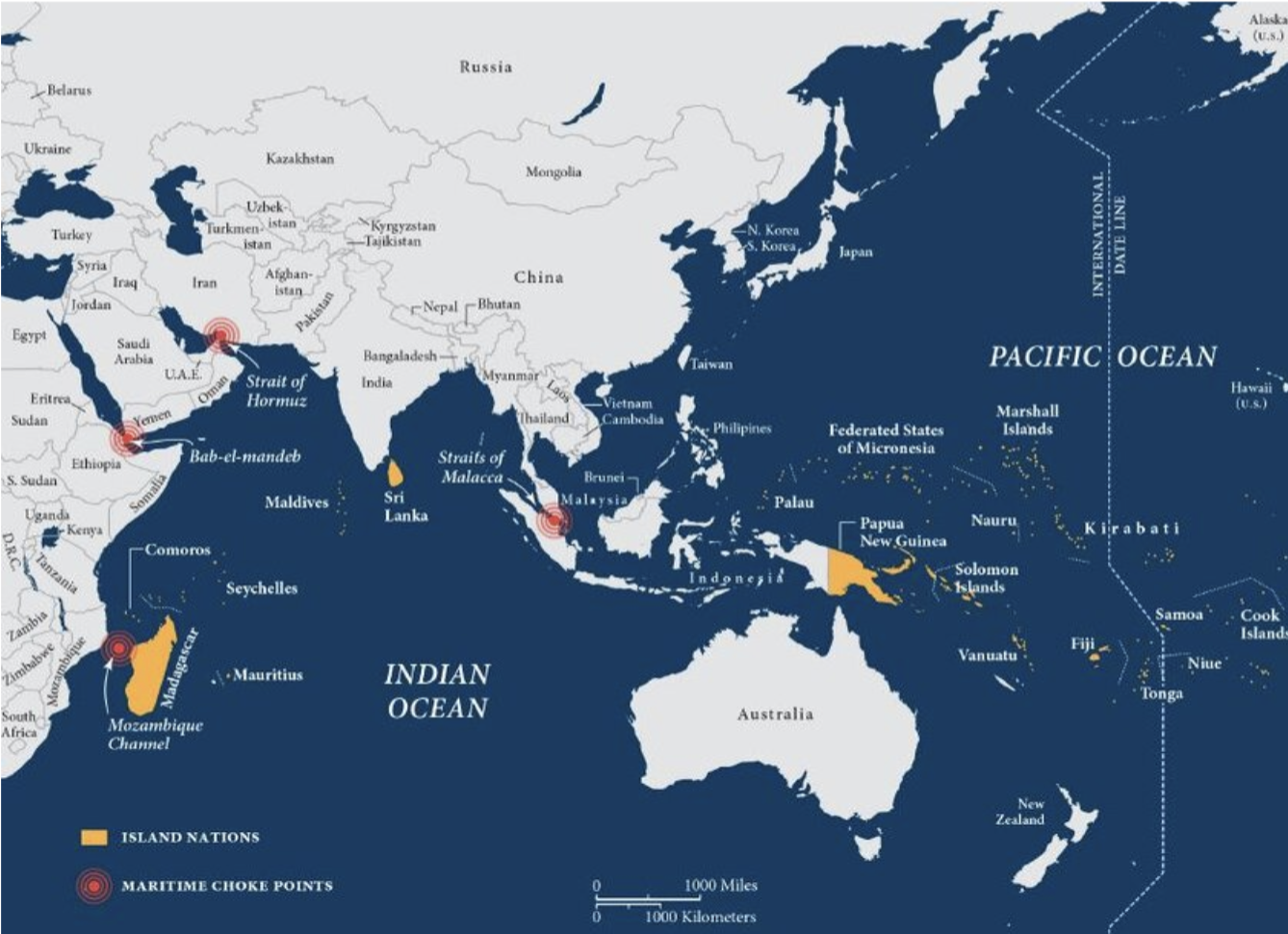
Map of the Indo-Pacific highlighting key maritime choke points and strategically important island nations. (Source: Indonesian Encyclopedia Yizuo Academy)
Instead of building on these relationships, Trump’s tariff policy is systematically dismantling them. While Trump imposed 50% tariffs on Indian goods, partly as punishment for New Delhi’s purchase of Russian oil, he simultaneously extended trade truces with China, which purchase 47% of all Russian crude exports compared to India’s 38%. If the goal is truly to pressure Russia by targeting its oil customers, we should focus on the largest buyer, especially if that buyer happens to be a geopolitical enemy.
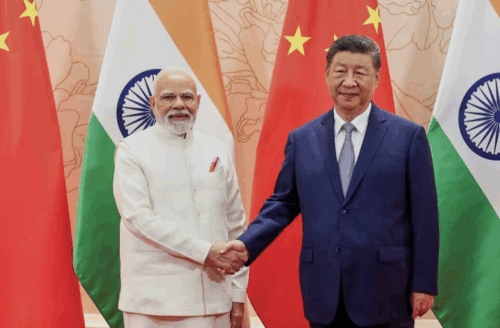
The tariffs are devastating India’s export industries. The £21 billion in textile and garment exports to the U.S. are bearing the brunt of what analysts estimate to be a £41-45 billion economic blow. More importantly for the U.S., China and Russia are not blind to this strategic gift. The recent Shanghai Cooperation Organization summit in Tianjin saw Chinese President Xi Jinping and Russian President Vladimir Putin warmly embracing Indian Prime Minister Narendra Modi. This was the first time Modi visited China in seven years. The carefully choreographed imagery sent a clear message: America’s allies are welcome in the anti-Western camp.
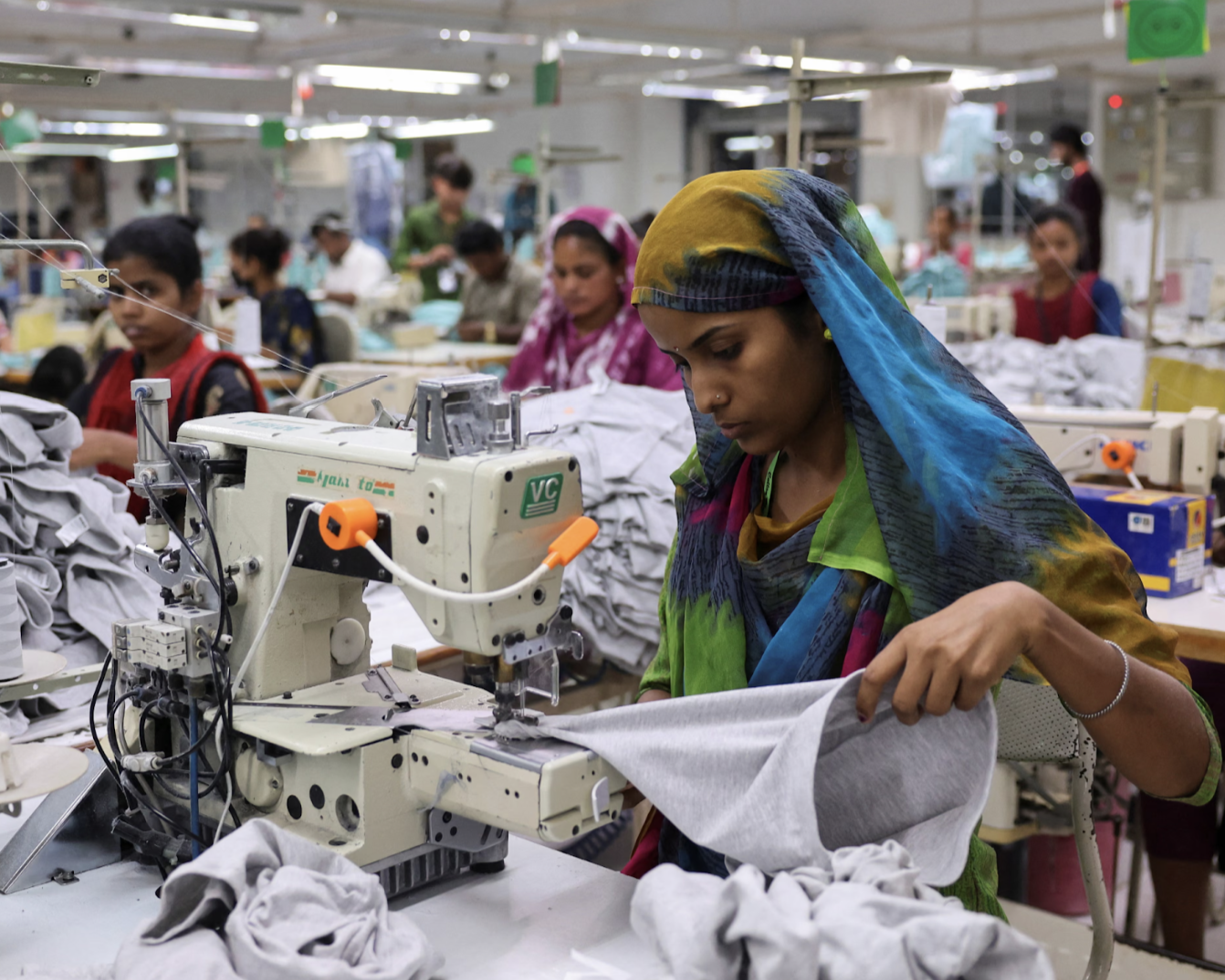
A clothing factory in Tirupur, a thriving textile center in the southern Indian state of Tamil Nadu. (Source: The Guardian)
This represents a seismic shift in Indo-Pacific geopolitics. China-India relations had remained nearly frozen since deadly clashes along their disputed border erupted in 2020, creating a five-year military standoff. Trump’s tariffs provided the catalyst for this reconciliation. As Michael Fullilove of Australia’s Lowy Institute observed, “President Trump’s gentle treatment of Vladimir Putin has done nothing to pull Russia away from China. His rough treatment of Narendra Modi, on the other hand, is pushing India closer to Russia and warming up its relations with China.”
The summit represented what analysts called a “reset” between China and India. Attended by leaders from Iran, Pakistan, Turkey, Belarus and Central Asian states, the summit effectively showcased an anti-Western coalition. Modi and Putin rode in the same car to their meeting, with the Indian leader describing their talks as “excellent” and announcing Putin’s expected visit to India in December. Modi declared that “even in the most difficult situations, India and Russia have always walked shoulder to shoulder,” emphasizing that “our close cooperation is important not only for the people of both countries but also for global peace, stability and prosperity.”
The meeting sent a clear message about India’s determination to maintain what analysts call “strategic autonomy.” As Kabir Taneja of New Delhi’s Observer Research Foundation explained, “Washington is not backing down in any shape or form, and no prime minister of India, which is the world’s largest democracy, can ignore public opinion. This means you have to stare down the U.S. and say we will not be cowed.” The prospect of the world’s two most populous countries, both nuclear powers, moving toward alignment should send chills through every American. A China-India alignment would create a consolidated bloc spanning from the South China Sea to the Arabian Sea, encompassing nearly 3 billion people and vast nuclear arsenals. This would effectively end America’s ability to contain Chinese expansion in the Indo-Pacific and fundamentally alter the global balance of power.
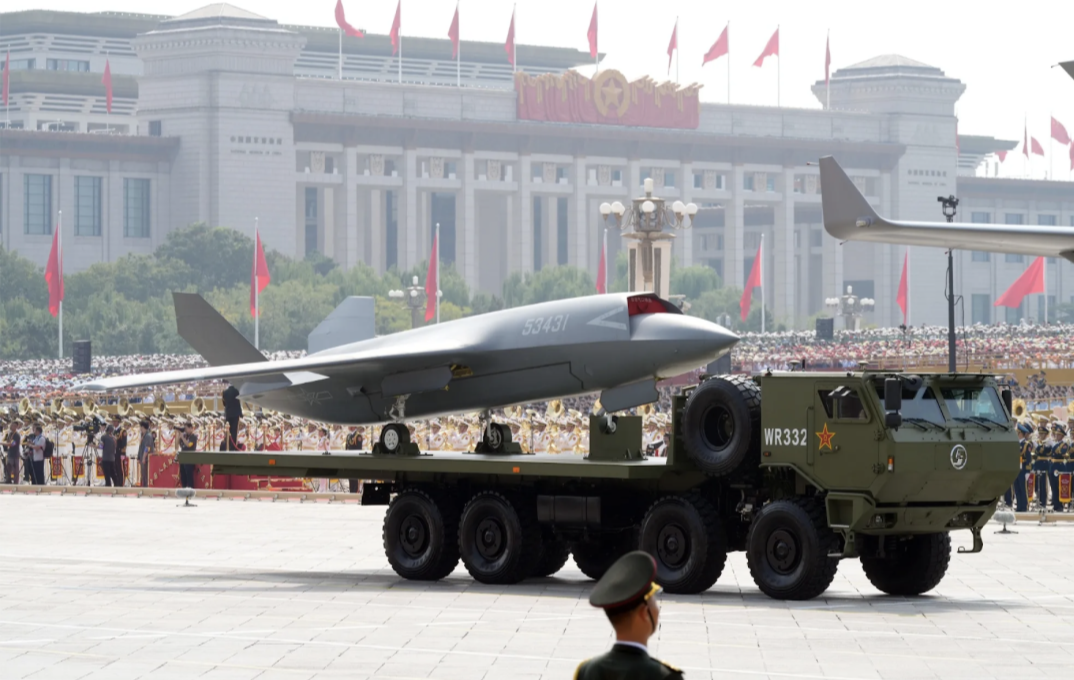
China displays an unmanned aerial vehicle during a military parade marking the 80th anniversary of victory over Japan and the end of World War II, in Beijing’s Tiananmen Square on September 3rd 2025. (Source: Bloomberg)
Rather than alienating India, Trump should be offering it a better deal. If the administration wants to reduce global dependence on Russian energy, it should help India diversify its energy sources through dramatically increased, and possibly subsidized, American Liquefied Natural Gas (LNG) exports. The United States has become the world’s largest LNG exporter, yet India continues to rely heavily on Russian oil precisely because America fails to provide a competitive alternative at scale. A comprehensive energy partnership offering India long-term contracts for American LNG at competitive prices would achieve the dual goals of reducing Russian revenues while strengthening the U.S.-India strategic partnership. This carrot-based approach would accomplish the same objective of weaning India off Russian energy while building, rather than undermining, the bilateral relationship.
If punishing Russia’s oil customers is truly the goal, China, not India, should be the focus. China purchases more Russian oil than India, has far less democratic legitimacy, poses a direct military threat to American allies and maintains a much larger trade surplus with the United States. Yet China continues to enjoy extended tariff truces while democratic India faces punitive measures. For decades, American grand strategy has sought to prevent the emergence of a Eurasian hegemon, but Trump’s India policy risks creating exactly that outcome by pushing the world’s largest democracy into a Beijing and Moscow-led anti-American alliance system. It’s not too late to correct course. Trump should immediately reconsider the India tariffs, replace punishment with partnership through expanded American LNG exports and focus economic pressure where it belongs: on China and Russia directly. America’s competition with China will be won or lost based on the strength of our alliances, and losing India to China would be nothing short of a strategic catastrophe.