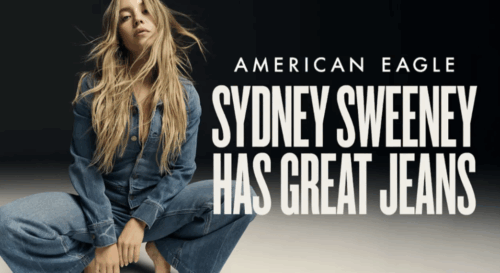
Recently, an ad campaign from clothing retailer American Eagle Outfitters sparked heated discourse online about the use of eugenics-related language. The advertisement, which appeared on a 20-story-high 3D billboard in Times Square, featured actress and producer Sydney Sweeney clad in full denim. In one clip, Sweeney says to the camera, “Genes are passed down from parents to offspring, often determining traits like hair color, personality and even eye color. My jeans are blue.” A male narrator then adds, “Sydney Sweeney has great jeans.” The video has since been taken down from American Eagle’s official page.
Many users on social media expressed discomfort and anger towards the wordplay used in the ad after it aired, stating that it had white supremacy undertones. Others argued that American Eagle was simply using Sweeney’s attractiveness as a marketing tactic.
Indeed, the campaign’s intentional use of oversexualization is confusing considering its claim to raise awareness about domestic violence. “The Sydney Jean,” which Sweeney collaborated on, has a butterfly motif on the back pocket to symbolize the experiences of survivors. Additionally, all net proceeds from “The Sydney Jean” are being donated to the Crisis Text line, a charity that Sweeney has vocalized her support for.
Regardless, the true purpose of the ad is to grab viewers’ attention in a way that incites arguments — what a seasoned internet user might call “rage-baiting.” Much of the media we consume today, whether through Times Square billboards or apps on our phones, is intentionally designed to anger us. This tactic increases engagement and gets more eyes on the offending material, which is what makes it so effective for formats like advertising. In fact, American Eagle’s plan worked flawlessly. Their stock price skyrocketed by 10% after the Sweeney ad launched, and suddenly every social media platform was buzzing with discussions and debates.
“People remember disruption,” said Allen Adamson, co-founder of the brand marketing firm Metaforce, in an interview with NPR. “This is really important for products that are commodities. Jeans are commodities.”
The conversation around the ad’s language even reached a federal level. Vice President J.D. Vance discussed it on the conservative Ruthless Podcast, mocking Democrats for deciding to “attack people as Nazis for thinking Sydney Sweeney is beautiful.” Even President Donald Trump joined in; he endorsed the ad after learning that Sweeney is a registered Republican. In a social media post, he asserted that Sweeney “has the ‘hottest’ ad out there” and that American Eagle jeans are “flying off the shelves.”
Sweeney is no stranger to publicity stunts. In June, she collaborated with men’s personal care company Dr. Squatch to create bars of soap containing her bathwater. Only 5,000 were made, and they quickly sold out, allowing savvy resellers on eBay to jack up prices as high as $800. According to Sweeney, the idea to make soap came to her after seeing the internet’s reaction to an earlier advertisement she did with Dr. Squatch. In the previous ad, she had appeared in a bathtub, and commenters on Instagram inquired about purchasing her bath water. It’s unclear whether these requests were satirical or genuine, but either way, Sweeney saw an opportunity for profit.
It seems Sweeney is fully aware of the internet’s tendency to sexualize her and is monetizing it to her advantage. Her brand partnerships and public presence serve as a reflection of the times we live in. As the U.S. becomes increasingly divided over politics, companies capitalize on using racist language and misogynistic imagery to cause outrage.
Sweeney and her team evidently understand that physical appeal and shock value are powerful tools in advertising. Her strategic campaigns make it clear that she is promoting an image and deliberately sparking controversy rather than simply marketing a product. As one Instagram user put it, “Are we selling jeans to women or selling women in jeans to men?”