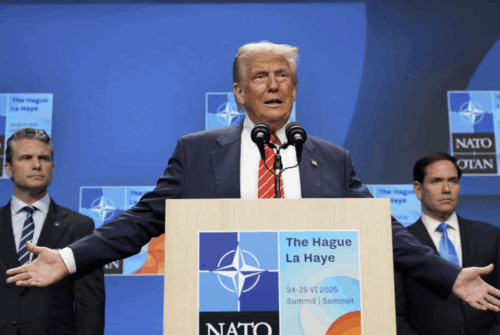
On Wednesday, June 25, President Trump achieved one of his flagship foreign policy goals at the NATO summit in The Hague, securing a commitment from allies to dramatically increase defense spending to 5% of their gross domestic product by 2035. This target is more than double the current 2% target that many European nations have struggled to meet, vindicating Trump’s years-long campaign against what he has characterized as “freeloading” by America’s allies.
The spending commitment is divided into two sections: 3.5% for traditional military costs, including air defense systems, recruitment and weapons procurement and the remaining 1.5% for militarily relevant infrastructure such as roads and bridges to support troop movements. This structure allows nations some flexibility while still requiring substantial increases in actual defense capabilities. NATO Secretary General Mark Rutte emphasized the urgency behind this commitment, telling reporters there was “absolute conviction” among leaders that, given the Russian threat and deteriorating international security situation, “there is no alternative.” If these goals are met, NATO defense spending will increase by more than 1 trillion dollars, or more than 65%.
Currently, US defense spending accounts for more than 67% of the total NATO defense spending. While this is a decline from the 73% of defense spending the U.S. accounted for in 2015, it is still more than the approximately 41.5% of the total GDP of NATO that the U.S. accounts for. This comes across as especially unbalanced when considering the increased risk European countries are at from foreign enemies due to their close proximity.
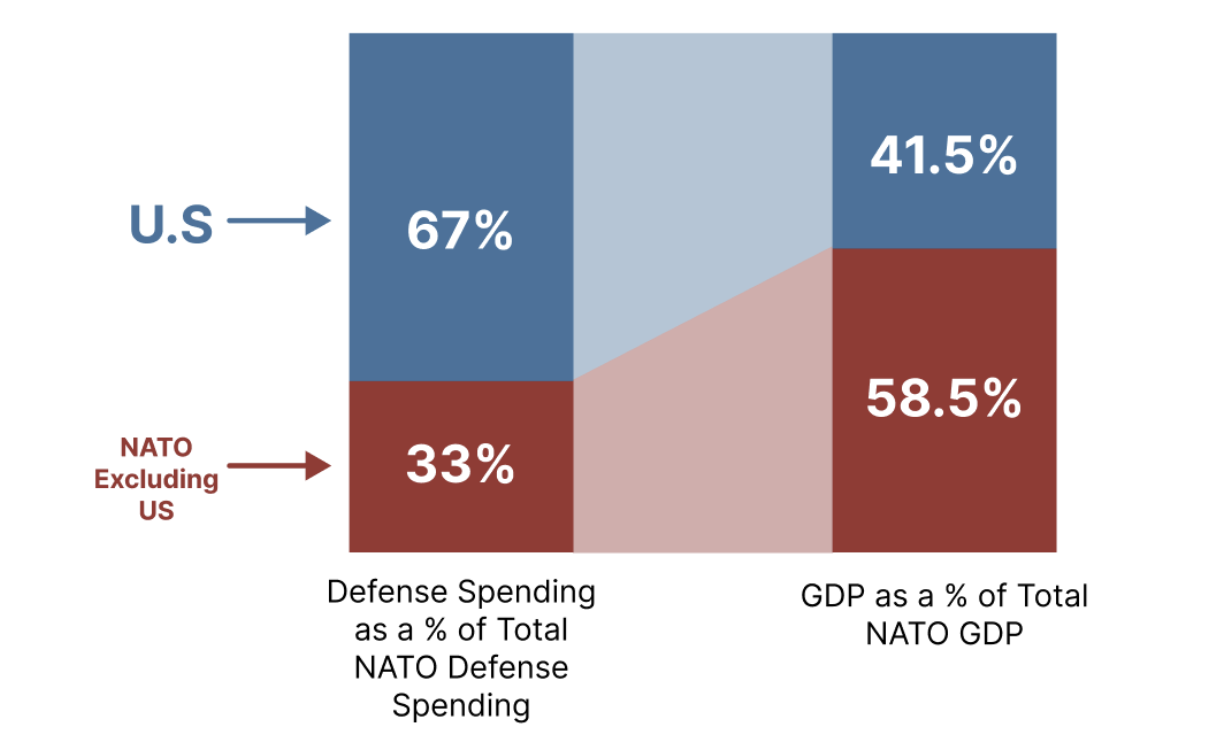
Source: Data from ABC News and The World Bank
The summit’s success was particularly notable given Trump’s historically contentious relationship with NATO. His arrival in The Hague on Tuesday was met by optimistic messages from Rutte, who praised Trump’s leadership in securing the agreement. “You will achieve something NO American president in decades could get done,” Rutte wrote in a private message that Trump later shared publicly. The NATO chief’s praise, describing Trump as “a man of strength” and “a man of peace,” reflected the alliance’s present recognition that accommodating Trump’s demands is essential for maintaining American commitment to European security. Trump’s leverage in these negotiations was likely strengthened by his previous statements that he would “encourage” Russia to “do whatever the hell they want” to NATO countries that did not pay their fair share. These remarks sent shockwaves through European capitals and drew heavy blowback abroad.
However, the consensus was not universal. Spain emerged as the primary holdout, with Prime Minister Pedro Sánchez rejecting the spending increase. “We fully respect the legitimate desire of other countries to increase their defense investment, but we are not going to do so,” Sánchez declared. Spain’s defense spending is currently at just 1.28% of GDP, the lowest among NATO countries. Slovakia also appeared hesitant, with Prime Minister Robert Fico suggesting his country “has other priorities in the coming years than armament.”
The Spanish position drew criticism from some NATO allies, especially those already meeting the 3.5% defense spending target. Poland’s Deputy Prime Minister Władysław Kosiniak-Kamysz, representing a country that spends more of its GDP on defense than any other NATO member, effectively condemned Spain’s position as “a bad example.” This division is part of the ongoing tension between nations that prioritize defense spending and those that maintain extensive welfare states while relying on American security guarantees.
Trump’s satisfaction with the summit outcome was evident in his extended press conference, where he declared, “this was a tremendous summit, and I enjoyed it very much.” His positive assessment contrasted with his previous criticisms of NATO as “obsolete.” The president’s mood was notably buoyant throughout the proceedings, helped by the royal treatment he received as a guest of Dutch King Willem-Alexander and Queen Máxima at the 17th-century Royal Palace Huis ten Bosch.
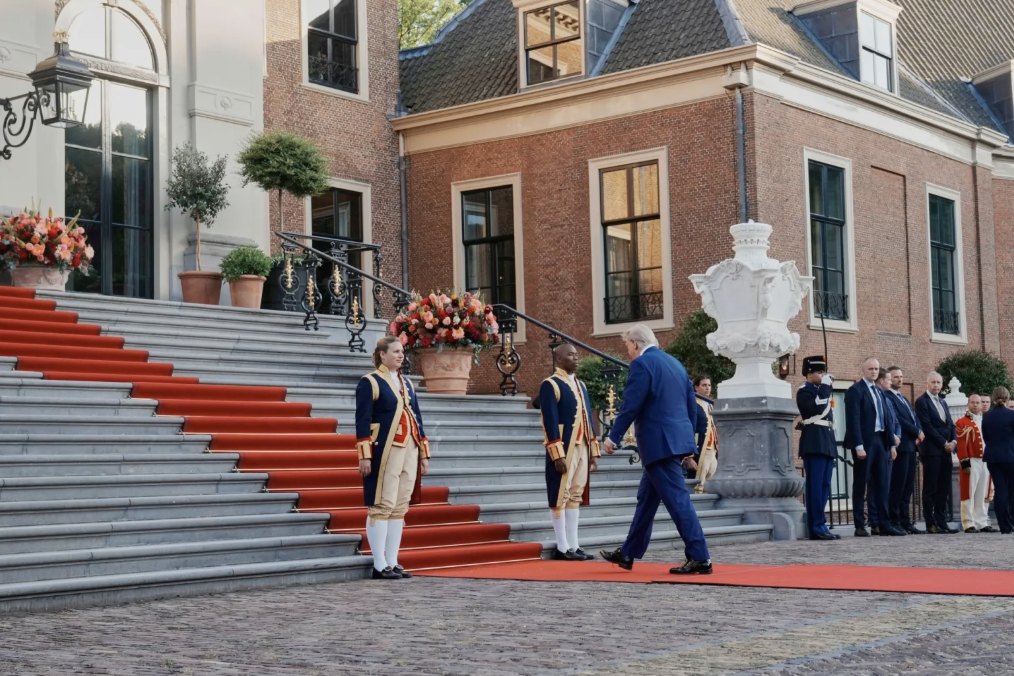
President Trump attends a dinner at the Paleis Huis ten Bosch on Tuesday, June 24, 2025. (Source: The Virginian-Pilot)
The summit’s focus on defense spending overshadowed other issues, including the ongoing war in Ukraine and broader questions about NATO’s strategic direction. While Ukrainian President Volodymyr Zelensky attended the summit and met with Trump, Ukraine’s hope of NATO membership remained unresolved. The alliance’s primary focus on appeasing Trump’s demands for burden-sharing left little room for discussions about Ukraine’s future or the alliance’s long-term response to Russian aggression.
Critics argued that the summit’s choreography prioritized Trump’s political satisfaction over urgent security concerns. Former Lithuanian Foreign Minister Gabrielius Landsbergis observed that European leaders had focused on winning “a political battle with Trump to appease him” rather than addressing the real threat posed by Russia’s military buildup.
The 5% spending commitment represents a fundamental shift in NATO’s financial structure, potentially equalizing European and American defense contributions for the first time in decades. Finnish President Alexander Stubb characterized this as “the birth of a new NATO, which means a more balanced NATO and a NATO which has more European responsibility.” This transformation, while addressing American concerns about burden-sharing, also raises questions about the alliance’s unity and decision-making processes as European nations assume greater financial responsibility.
The timeline for implementing these increases, extending to 2035, provides both flexibility and uncertainty. While the extended timeframe allows governments to slowly adjust their budgets and build public support, it also creates opportunities for future backsliding and time for political changes that could undermine the commitments. The success of this initiative will ultimately depend on European nations’ ability to maintain political will for increased defense spending over more than a decade, despite potential economic challenges.
Trump’s achievement at The Hague shows the continued importance of American leadership in shaping NATO’s direction, even as the alliance evolves toward greater European responsibility. The President’s ability to secure this commitment through pressure and diplomacy validates his transactional approach to international relations for some, while also ensuring that America’s European allies will bear a greater share of the burden for their own defense. Whether this new arrangement will strengthen or strain the alliance remains to be seen, but Trump has undeniably secured a significant victory in his long-standing campaign to rebalance NATO’s financial obligations.