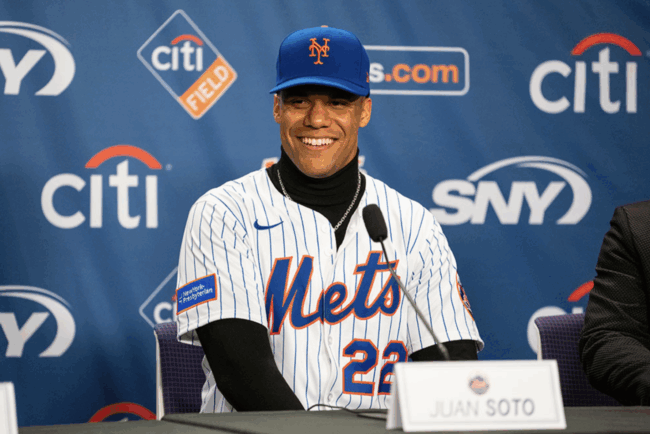
Of America’s four major sports leagues, Major League Baseball, the National Basketball Association, the National Hockey League and the National Football League, only MLB doesn’t employ a salary cap to prohibit spending inequalities. With recent, historically large deals like Soto’s and two-way player Shohei Ohtani’s of $700 million, and MLB’s Collective Bargaining Agreement (CBA) with the Players Association (MLBPA) expiring in 2026, executives have voiced support for a salary cap. While a cap seems that it’d limit inequalities between teams more than the current policy of taxing teams that spend more than a certain amount, it’d impact players more significantly, causing lower salaries and another potential strike. Additionally, a cap wouldn’t address the main reason for MLB’s spending inequalities–stingy owners.
In 2024, the three teams with the highest payrolls, the New York Mets, New York Yankees and Los Angeles Dodgers, combined to spend $860 million on players. The bottom three teams, the Oakland Athletics, Pittsburgh Pirates and Cleveland Guardians, spent $240 million. All of the top three teams reached the Championship or World Series, while none of the bottom three came close. Data from the past decade mirrors that of 2024; nine of the last ten World Series champions have finished top ten in that year’s spending.
This correlation between spending and success has angered executives, prominently of small-market teams. For instance, Baltimore Orioles owner David Rubenstein argued that a salary cap would promote inter-team parity. Additionally, Commissioner Rob Manfred discussed a cap, acknowledging that MLB’s financial disparities are “a really important issue that we need to pay attention to.” The argument has its merits; theoretically, a salary cap would create a balanced market allowing every team–including Rubenstein’s Orioles with their 21-ranked 2025 payroll–to compete for free agents, players available to all teams to sign.
In reality, though, a salary cap wouldn’t initiate equal spending. Though teams often attribute lack of spending to insufficient financial resources, many teams near the bottom of 2025’s payroll list have money to spend but choose not to. For example, the Chicago White Sox hold the 27th highest payroll, $82 million, but Forbes ranked them as the 16th most valuable team, showing that they could spend if they wished. They maintain a cheap payroll, though because of owner Jerry Reinsdorf’s avoidance of spending. Similarly, the Washington Nationals’ 2025 payroll ranks 24th at $107 million, but Forbes ranked them as 15th most valuable. Both of these examples show that often, MLB teams’ reluctance to spend on free agents comes not from an unfair market, but from owners valuing their self-interest above their team.
A salary cap would also hinder all players’ abilities to maximize their contracts. Currently, with no ceiling on contracts, teams can offer as much money as they can afford to players. The lack of a ceiling also leads to bidding wars between teams, creating higher contracts and allowing for players to make more money. A salary cap, though, would drastically limit the bidding wars and decrease contracts’ value. This same conflict occurred in 1994 when players refused a salary cap and went on strike, causing the loss of 938 regular season games and playoffs, and financial and legal issues. The current MLBPA, led by former player Tony Clark, has been clear about its aversion to a cap and its willingness to go on strike again if necessary. Negotiations for the new CBA–including a potential cap– begin during the 2026 season, and another lockdown would not only lead to missed games and dissatisfaction from players, owners and fans, but also a revenue pause that teams would struggle to recover from.
A salary cap seems that it would create an equal playing field for all 30 teams, but it wouldn’t address the true reason for teams’ reluctance to spend, and it could lead to a lockdown harming everyone involved. Instead of focusing on a salary cap, teams like the Nationals and White Sox should work to improve their teams like the Tampa Bay Rays have; despite falling in the bottom eight in spending every year since 2019, they’ve reached the playoffs in five of these years, including a World Series appearance, proving that teams don’t need to spend hundreds of millions of dollars to win.